
15-Minute Cleaning Habits That Make a Big Difference
Fifteen minutes is long enough to create a visible improvement in a room but short enough to fit between other responsibilities. The secret is choosing one clear target rather than wandering through the house doing unrelated tasks. Short cleaning habits work especially well for people who feel discouraged by large checklists, because the timer creates a defined ending and encourages you to focus on high-impact actions. You can use one fifteen-minute session a day, combine several when you have energy, or use them only during especially busy weeks. The goal is not to finish a whole room perfectly. It is to keep dirt, dishes, laundry, and clutter from accumulating until they require a much larger recovery effort. With a few repeatable routines, small blocks of time can protect the home’s baseline surprisingly well and make deeper weekly cleaning sessions faster.
Do a 15-Minute Kitchen Rescue
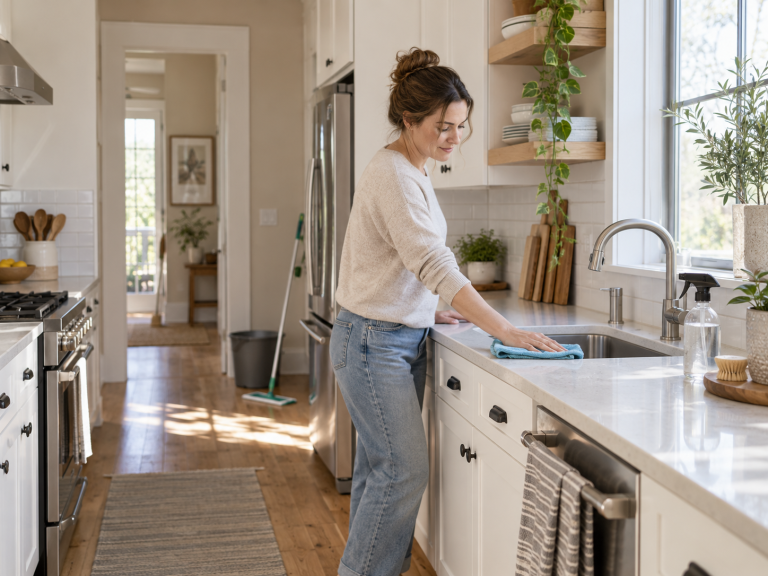
Set a timer and focus only on making the kitchen functional again. Start with food safety by putting away leftovers or ingredients, then load or stack dishes, clear the main preparation area, and wipe obvious spills. If time remains, clean the sink and sweep visible crumbs from the busiest part of the floor. Do not begin reorganizing cabinets or scrubbing the oven, because those tasks can consume the entire session without improving everyday function. A kitchen rescue is ideal after a hectic evening, before guests arrive, or when several small meals have left the room untidy. The stopping point matters: when the timer ends, finish the item in your hands and move on. Repeating this habit frequently prevents the kitchen from becoming a project and makes it much easier to prepare the next meal without first having to create working space.
Reset One Bathroom From Top to Bottom
A small bathroom can often be refreshed in fifteen focused minutes. Remove loose items from the counter, wipe the mirror, clean the sink and faucet, then address the toilet and the most visible shower or tub areas. Empty the trash if needed, replace the hand towel, and finish with a quick sweep or floor wipe. Use separate appropriate tools for different surfaces and follow product instructions, especially in a small room with limited ventilation. Avoid emptying drawers or starting detailed grout work during this session. The purpose is to improve the areas people notice and touch most. If you have several bathrooms, rotate them on different days instead of trying to clean every one in the same fifteen minutes. Frequent quick resets usually reduce soap residue, dust, and hair enough that deeper bathroom cleaning becomes less demanding when you eventually schedule it.
Clear Every Flat Surface in One Room
Choose one room and spend fifteen minutes clearing horizontal surfaces such as tables, dressers, counters, and shelves. Throw away obvious trash, return items that already have homes, and place anything that belongs elsewhere into a relocation basket. Do not stop to organize the destination room while you are working, because that quickly turns one focused task into several unfinished projects. Once the surfaces are mostly clear, wipe the ones that need cleaning with an appropriate cloth. This habit creates a strong visual result because clear surfaces make a room feel calmer even if drawers and closets are not perfect. It also reveals whether certain objects repeatedly lack a permanent home. If the same items return to a surface every day, consider changing the storage system later. The fifteen-minute session is for restoring the room, while system redesign can happen separately when you have more time.
Vacuum Only the High-Traffic Paths
You do not always need to vacuum every edge of every room to improve the floor. In fifteen minutes, focus on the routes people and pets use most: the entrance, kitchen path, hallway, living room seating area, and the area around the dining table. Pick up only enough objects to move safely and avoid shifting heavy furniture. This targeted habit removes visible crumbs, hair, dust, and grit before they spread deeper into carpets or across hard flooring. On another day, you can handle corners, under furniture, or less-used rooms. High-traffic vacuuming is particularly useful in households with children, pets, or outdoor shoes because the floor can look noticeably better after a short pass. By separating frequent maintenance from detailed vacuuming, you keep the home presentable without turning every floor-cleaning session into a large physical task.
Move One Laundry Load From Start to Finish
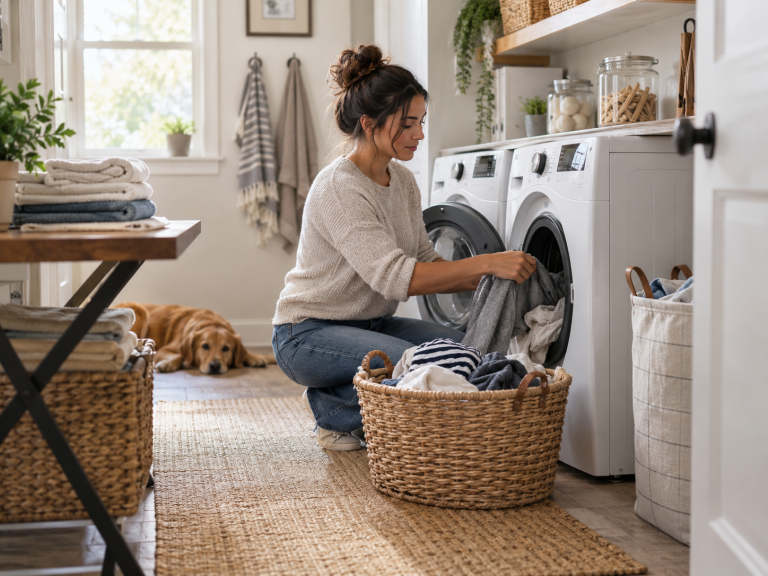
Use a fifteen-minute block to advance laundry as far as possible rather than starting multiple loads. Gather one category, start or transfer the machine, then use any remaining active time to fold a dry load or put away clean clothing. Of course, the machine cycle itself takes longer than fifteen minutes, but your hands-on work can stay contained. The key habit is finishing the cycle across the day so clean laundry does not become permanent basket storage. If putting clothing away takes too long, simplify folding methods or reduce how tightly drawers are packed. A short daily laundry habit is often easier than a large weekend pile because each load remains small enough to complete. It also keeps bedrooms and bathrooms clearer, since hampers are less likely to overflow. Treat laundry as a flow of stages rather than one giant chore that must be completed all at once.
Use a 15-Minute Entryway Reset
The entryway is a small area with an outsized effect on how the home feels. Spend fifteen minutes pairing and limiting shoes, hanging outerwear, returning bags, recycling delivery packaging, and clearing the main walking path. Wipe the console or shelf, shake or vacuum the mat, and sweep visible dirt near the door. If items belong in distant rooms, collect them in a basket and relocate them after the timer instead of leaving the entry unfinished. This habit is especially useful after a rainy week, school activities, travel, or a period of frequent deliveries. A clear entry improves mornings because essential items are easier to find and leaving the house requires less searching. It also reduces the amount of outdoor debris carried farther inside. Keeping this transition zone controlled can make the rest of the home easier to maintain with very little time.
Clean One “Ignored” Zone Each Day
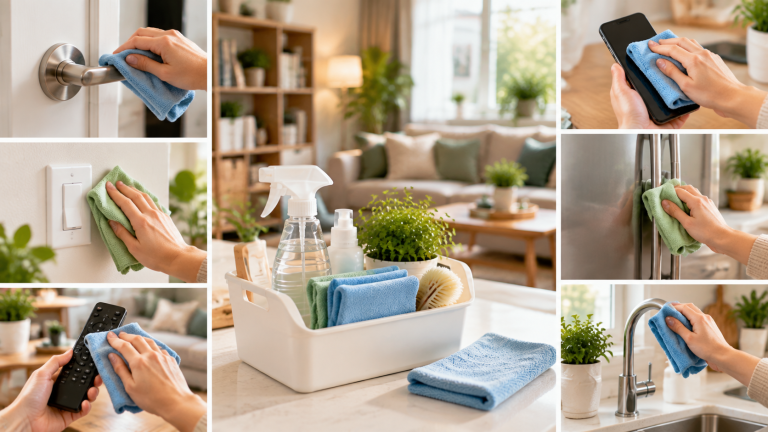
Short sessions are perfect for small areas that are easy to postpone. Choose one ignored zone such as the microwave interior, refrigerator door shelves, a windowsill, bathroom cabinet front, bedside drawer, ceiling fan blade, or the area beneath a small appliance. Spend no more than fifteen minutes cleaning it properly, then stop. Rotating these tasks prevents the long list of occasional jobs from turning into an overwhelming seasonal clean. Keep a simple note of completed zones if that helps you vary the work, but avoid creating a complicated tracking system. The aim is to use leftover pockets of energy efficiently. One small neglected area may not transform the whole house, yet completing several across a month significantly improves overall cleanliness. Because the task has a clear boundary, it is also easier to begin than a vague plan to “deep clean” whenever you finally have time.
Pair the Timer With Music, a Podcast, or a Routine Cue
A fifteen-minute habit becomes easier to repeat when it has a consistent cue. Start the timer after dinner, while coffee brews, before a favorite program, or immediately after arriving home. You can also use one short playlist or a specific podcast segment to mark the session, as long as the audio does not distract you from safe cleaning. The cue reduces the mental negotiation about whether you feel motivated because the habit is attached to a familiar event. Keep supplies accessible so setup does not consume half the time. A portable caddy can be helpful for general surfaces, while room-specific supplies may stay closer to where they are used when safely stored. The purpose of the timer is not to make you rush dangerously. It creates a manageable container for effort, allowing you to work steadily and stop before cleaning takes over the rest of your schedule.
Conclusion: Small Sessions Prevent Big Recoveries
Fifteen-minute cleaning habits make a big difference because they keep ordinary mess from becoming an urgent whole-home problem. A kitchen rescue restores meal space, a bathroom reset manages moisture and high-touch surfaces, a flat-surface session reduces visual clutter, and targeted vacuuming controls the busiest floors. Laundry, entryways, and ignored zones can all improve through the same focused approach. Choose one task before starting the timer, avoid adding unrelated projects, and stop when the session is complete. Some days you may have energy for two or three rounds, while other days one is enough. The value comes from repetition, not intensity. When small areas are regularly returned to baseline, weekly cleaning becomes less demanding and your home feels more manageable even during periods when a longer cleaning session simply does not fit into your life.