
The Best Home Organization Ideas for a Calm and Clutter-Free Space
The best home organization ideas do not require a perfectly matched collection of baskets or a dramatic renovation. They work because they make ordinary actions easier: putting something away, finding what you need, clearing a surface, and moving through the house without stepping around piles. A calm home is usually the result of fewer visible decisions and more predictable storage. That means reducing excess where necessary, but it also means designing systems around daily behavior instead of forcing the household to follow complicated rules. The ideas below focus on flexibility, accessibility, and visual quiet. You can apply them gradually to one room at a time and use containers you already own before purchasing anything new. When storage locations make sense and every busy area has enough breathing room, the home feels more settled even when real life is happening inside it.
Create Zones Around Activities
Instead of organizing only by room, divide spaces into activity zones. A kitchen can include a coffee zone, baking zone, lunch-packing zone, and food-preparation zone. A living room might have a reading corner, media area, and small homework station. Keeping the supplies for one activity close together reduces unnecessary movement and prevents items from being stored wherever empty space happens to exist. The zone does not need a physical divider; it can be as simple as one shelf or drawer dedicated to a task. Start by noticing which objects are regularly used together and relocate them as a group. If a zone becomes overcrowded, that is a useful signal to reduce quantity or move less-frequent items elsewhere. Activity-based organization makes rooms feel intuitive because the storage reflects how people actually use the space, which makes returning items much easier.
Use Open Storage for High-Frequency Items
Items used several times a day should usually be among the easiest things to put away. Hooks, shallow baskets, trays, open shelves, and wall rails can be more practical than deep cabinets for high-frequency belongings. This is especially useful for keys, everyday bags, kitchen towels, frequently worn outerwear, pet supplies, or children’s items. Open storage can still look calm when categories are limited and containers have clear boundaries. The key is not to expose everything. Use open storage selectively for items that benefit from quick access, while keeping visual clutter such as bulk supplies, paperwork, and backups behind doors when possible. If an item repeatedly lands on a counter rather than inside a cabinet, consider whether the cabinet is too inconvenient. Moving the storage point closer to the natural drop zone can solve what seems like a discipline problem with a simple design change.
Add Vertical Storage Before Adding More Furniture
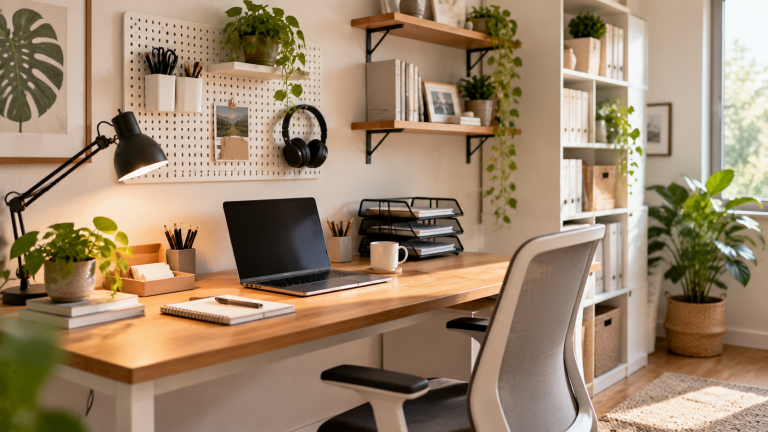
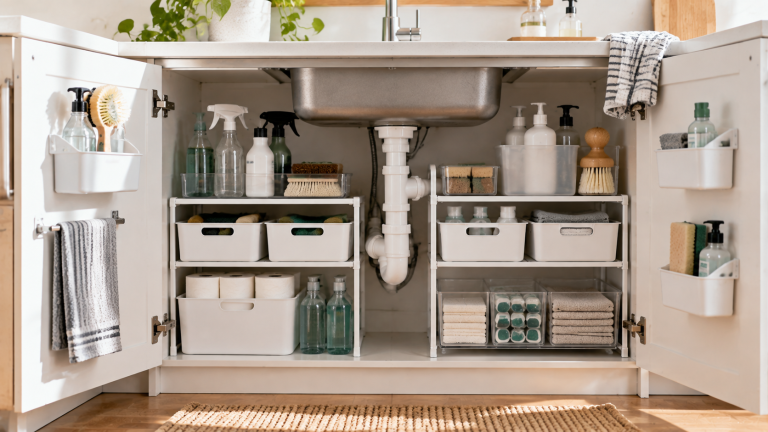
When floor space is limited, vertical space is often the most underused resource. Hooks behind doors, wall-mounted shelves, pegboards, stackable bins, and tall shelving can increase capacity without making a room feel crowded. Vertical storage works particularly well for light categories such as hats, bags, cleaning tools, craft supplies, and pantry backups. Keep frequently used objects between waist and eye level, with lighter or less-used items higher up. Avoid filling every wall simply because space exists; the purpose is to move useful belongings off horizontal surfaces while preserving visual breathing room. In closets and cabinets, shelf risers can create an extra level for dishes, canned goods, or folded clothing without permanent installation. Using height strategically can delay or eliminate the need for additional furniture, which often makes the room feel larger and easier to navigate.
Turn Drawers Into Small, Visible Categories
Drawers become chaotic when they are treated as empty boxes rather than organized surfaces. Use dividers, small containers, or repurposed boxes to create broad categories that prevent small items from mixing together. In a kitchen drawer, separate cooking tools by type rather than giving every utensil its own exact slot. In a bathroom, group dental care, hair accessories, skincare, and backups. The best divider system leaves enough flexibility for the category to change over time. Visibility matters because you are more likely to use what you can see and less likely to buy duplicates. Avoid stacking multiple layers of small items unless the lower layer contains rarely used supplies. A shallow, single-layer arrangement may hold slightly less, but it is easier to maintain. The goal of a drawer is not maximum capacity; it is reliable access and a clear path for putting things away.
Leave Intentional Empty Space
Empty space is one of the most useful organizing tools because it provides room for real life. A shelf packed edge to edge may look efficient, but it leaves no capacity for groceries, a new book, a temporary project, or the natural movement of items during the week. Try to leave a little space in frequently used drawers, cabinets, and closets. This buffer makes it possible to return objects without squeezing, stacking, or reorganizing first. Empty space also helps a room look calmer because the eye can distinguish categories rather than seeing one continuous wall of belongings. You do not need to remove useful items simply to create a minimalist appearance, but when storage is completely full, consider whether everything deserves equal access. A modest amount of unused capacity often improves function more than adding another storage product to an already crowded area.
Use Baskets as Boundaries, Not Hiding Places
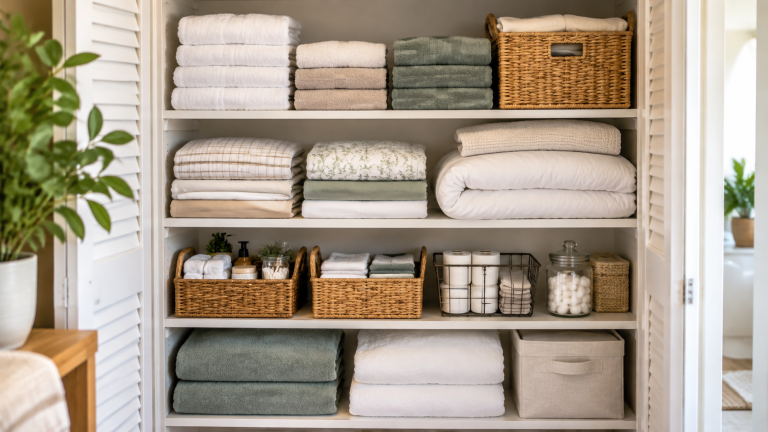
Baskets are effective when they define a category and limit its quantity. They are less effective when they become anonymous containers for things you do not know where to put. Assign each basket a clear function, such as extra blankets, pet toys, incoming packages, or workout accessories, and avoid mixing unrelated items simply because they fit. Choose a size that matches the category rather than buying the largest container possible. A smaller basket can create a natural limit that encourages you to keep the best or most useful items. In open areas, baskets can reduce visual noise by grouping many small objects into one shape, but they should still be easy to empty and review. If you repeatedly forget what a basket contains, add a simple label or move the category somewhere more visible. Good storage supports memory instead of requiring it.
Create a Household Reset Station
A reset station is a small collection of tools that helps you restore order quickly. Depending on your home, it might include a lightweight cleaning cloth, small trash bag, lint roller, basket for misplaced items, and a notepad for things that need attention. Keep the station in a central cabinet or utility area so you can grab it during a ten-minute reset rather than searching for supplies in multiple rooms. This idea is particularly useful in multi-level homes, where carrying a relocation basket up or down the stairs once a day can prevent objects from gathering on steps. The station should remain simple and portable. Its purpose is not to replace proper storage but to make routine maintenance easier. When resetting the home requires less preparation, you are more likely to do it regularly, which protects the organizing systems you have already created.
Make Storage Easy to Understand for Everyone
A system that only one person understands will eventually become difficult to maintain. Shared spaces should use broad, intuitive categories and storage locations that are easy to explain. For example, one shelf for lunch containers is more sustainable than separating lids and bases into several highly specific bins if no one else follows the method. Labels can help in pantries, linen closets, playrooms, and garages, but the label should describe a category people naturally recognize. Place frequently used family items where all appropriate household members can reach them, including children when possible. Organization becomes calmer when responsibilities are distributed because putting things away does not depend on a single person remembering every location. If people consistently store an item differently from the intended system, observe the pattern. Their behavior may reveal a more convenient location that should become the new official home.
Conclusion: Choose Systems That Reduce Friction
The most effective home organization ideas have one thing in common: they reduce friction. Activity zones shorten the distance between a task and its supplies, open storage makes high-frequency items easier to return, vertical solutions free crowded surfaces, and drawer dividers improve visibility. Baskets create boundaries, empty space provides flexibility, and shared systems help everyone participate. You do not need to apply every idea at once. Choose the room that creates the most stress and change one system that would make the next ordinary day easier. Then observe whether the new setup survives real use. If it does, build on it; if it does not, simplify it. A calm and clutter-free space is not maintained by constant effort. It is maintained by storage decisions that cooperate with your routines, leave room for change, and make the correct action the easiest action.