
How to Declutter Your Home Room by Room
Decluttering an entire home can feel intimidating because every room contains different categories, memories, and unfinished decisions. The easiest way to make progress is to work room by room with a clear purpose for each space. Rather than asking whether every object sparks joy or trying to reach a specific number of possessions, focus on whether your belongings support the way the room needs to function. This practical approach makes decisions less emotional and helps you avoid moving clutter from one area to another. Before you begin, prepare four simple destinations: keep, donate, recycle or trash, and relocate. Work in short sessions that you can finish, and remove donation and trash items promptly. The goal is not an empty house. It is a home where useful things are easy to find, surfaces have breathing room, and each room feels easier to live in.
Entryway: Remove Obstacles to Coming and Going
Start with the entryway because it sets the tone for both arriving and leaving. Remove shoes that are out of season, damaged, or rarely worn, and limit the number of pairs that stay near the door. Check hooks for bags, jackets, umbrellas, and reusable totes that have quietly accumulated. Old receipts, delivery packaging, flyers, and unrelated household items should leave immediately. Keep only the objects that support the transition in and out of the home. If the entry lacks storage, use one small tray for pocket items and a limited basket for essentials rather than adding large furniture before you know what must be stored. A decluttered entrance improves more than appearance; it prevents daily items from migrating deeper into the house and creates a natural point where keys, shoes, and bags can return after every trip.
Living Room: Protect the Space for Rest and Connection
Living rooms often collect belongings because they are central, comfortable, and used by everyone. Begin with visible surfaces such as coffee tables, side tables, media units, and the floor around seating. Remove cups, paperwork, toys, chargers, books, and decorative objects that belong elsewhere. Then look at what permanently occupies the room. Too many decorative items can make dusting difficult and reduce useful surface space, while oversized furniture can create visual clutter even when nothing is technically out of place. Keep entertainment items that are actually used and consider limiting magazines, games, blankets, and remote controls to specific containers. Decluttering this room should support its main purpose, whether that is conversation, television, reading, or family time. When every object has a reason to be there, the room becomes easier to reset at the end of the day and more relaxing to use.
Kitchen: Declutter by Function, Not Just by Cabinet
The kitchen is easier to declutter when you work by activity rather than emptying every cabinet at once. Start with food preparation tools, then cooking utensils, drinkware, food storage containers, pantry items, and cleaning supplies. Remove duplicates you never reach for, gadgets that have not been used in a year, chipped dishes, lidless containers, expired food, and ingredients you realistically will not use. Pay attention to quantity rather than asking whether each item is individually useful. Six spatulas may all work, but you may only need three. Keep the tools that fit your cooking style and kitchen size. Clearing excess items creates room for everyday equipment to remain accessible instead of stacked behind occasional pieces. When cabinets are not packed tightly, you can see what you have, put groceries away faster, and maintain the kitchen with far less rearranging.
Bedroom: Reduce What Competes With Rest
A bedroom should support sleep, dressing, and personal routines, yet it often becomes storage for unfinished tasks. Start with nightstands and any chair or bench where clothing gathers. Remove unrelated paperwork, empty packaging, old water glasses, excess books, and items waiting to be taken elsewhere. Next, examine the clothes visible outside the closet. If clean clothes regularly sit in baskets because drawers are too full, the storage volume may be the real problem. Declutter enough that frequently worn items can be put away without forcing or complicated folding. Keep the top of the dresser relatively clear so the room feels settled even during busy weeks. Personal items and sentimental objects can stay, but give them intentional locations. Reducing visual noise around the bed often creates an immediate sense of calm and makes the evening routine easier.
Closet: Make Decisions Based on Your Current Life
Closet decluttering becomes difficult when decisions are based on imaginary future versions of yourself. Instead, evaluate clothing according to your current size, activities, climate, work requirements, and preferences. Remove worn-out pieces that cannot reasonably be repaired, uncomfortable items you repeatedly avoid, and duplicates that exceed what you use between laundry cycles. Special-occasion clothing can remain even if it is not frequently worn, but it should not crowd out everyday essentials. Try to keep similar items together so you can see quantity clearly before making decisions. If you own ten nearly identical black shirts, comparing them side by side makes it easier to choose favorites. The goal is not a tiny wardrobe; it is a closet where you can reach what you like, return clean clothes easily, and get dressed without sorting through items that no longer fit your real routine.
Bathroom: Remove Expired and Half-Used Clutter
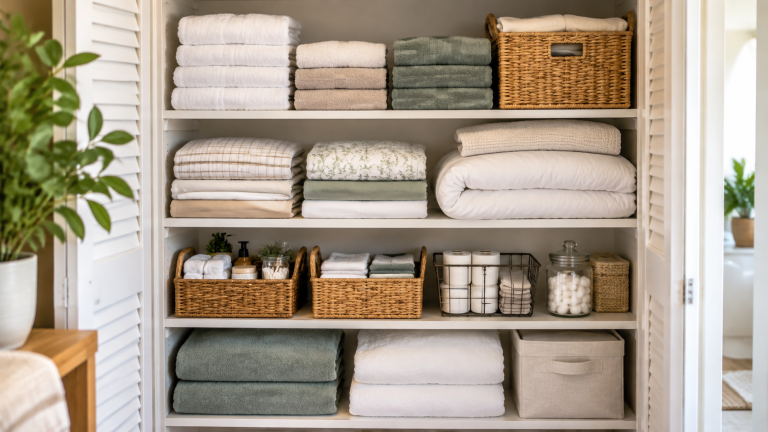
Bathrooms contain many small products that are easy to overlook because they fit inside drawers and cabinets. Check medications according to local disposal guidance, discard expired cosmetics and toiletries, and remove empty or nearly unusable containers. Gather duplicate products so you can finish open items before buying more. Keep daily essentials close to where they are used, while backups can live in one defined storage area. Avoid keeping large quantities of hotel samples or products you already know you dislike simply because they are technically usable. Towels also deserve attention; keep enough for the household and normal laundry schedule, then donate clean extras that are still in good condition. A bathroom with fewer products is easier to clean because counters and shower ledges stay clearer, and you can immediately see when something needs to be replaced rather than purchasing duplicates hidden behind older items.
Home Office and Paper: Make Every Document Earn Its Space
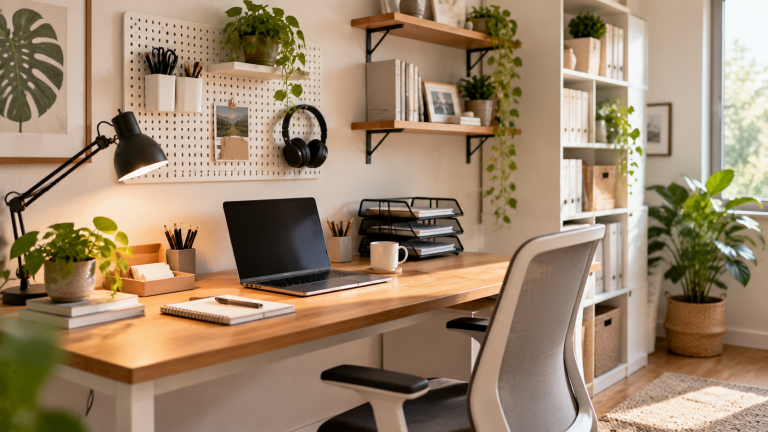
Paper clutter can feel more serious than other categories because some documents are important, but that does not mean everything should be saved. Begin with obvious recycling such as expired coupons, envelopes, duplicates, outdated printouts, and notes that no longer make sense. Then separate documents into action, short-term reference, and long-term records. Use broad categories that you understand without a complicated filing system. For digital files, apply the same principle by deleting unnecessary downloads, duplicate scans, and outdated versions. Office supplies also accumulate quietly, so test pens, consolidate notebooks, and keep only practical quantities of folders, clips, and spare cables. A clear desk does not require owning nothing; it requires moving inactive items out of the work zone so the surface is available for current tasks. When paperwork has defined destinations, incoming documents stop becoming permanent piles.
Storage Areas: Stop Treating Them as a Delay Zone
Garages, spare rooms, attics, and storage closets often contain delayed decisions from the rest of the house. Approach these areas after you have decluttered everyday rooms because you will have a better sense of what deserves long-term space. Group items by category and check whether stored belongings are still safe, useful, and relevant. Holiday decorations, tools, travel equipment, and sentimental boxes may justify storage, but broken furniture, unidentified cables, abandoned hobbies, and boxes that have remained unopened through multiple moves deserve closer scrutiny. Avoid keeping an item simply because there is technically room for it. Storage space is valuable because it protects what you intentionally choose to keep. Label broad categories and leave pathways or shelf access clear. A useful storage area allows you to retrieve things without unloading half the room, which is only possible when excess volume has been reduced.
Conclusion: Declutter in Completed, Repeatable Rounds
The most effective way to declutter your home room by room is to make the project smaller than your available energy. Finish one cabinet, one category, or one room before moving forward, and remove donations and trash so they do not become new clutter. Let the purpose of each room guide your decisions: the entryway should support transitions, the bedroom should support rest, the kitchen should support cooking, and storage areas should protect belongings worth keeping. You do not need to make every difficult sentimental decision in the first round. Decluttering can happen in layers, and each pass becomes easier as you learn what you actually use. The result you are aiming for is not emptiness but capacity: enough open space in drawers, cabinets, and surfaces that everyday life can happen without constant rearranging. That capacity is what makes a home easier to organize long after the decluttering session ends.