
How to Keep Your House Clean Without Cleaning All Day
Keeping a house clean does not require spending every free hour wiping, vacuuming, and putting things away. What usually creates the feeling of “cleaning all day” is repeated recovery: dishes build up, floors become visibly dirty, laundry reaches several stages at once, and clutter blocks the surfaces you need to clean. The solution is not necessarily to work harder. It is to shorten the gap between small messes and simple resets while giving larger tasks a predictable place in the week. A clean home can still contain evidence of daily life, especially when people are cooking, working, playing, or caring for others. The goal is a functional baseline that can be restored quickly. With clear priorities and a few efficient routines, you can reduce the total time cleaning takes while still keeping the spaces you use most comfortable and presentable.
Use a Weekly Rhythm Instead of Random Cleaning
Random cleaning often feels endless because there is no clear point at which you are finished. A weekly rhythm gives each major category a place, so you do not feel responsible for every room every day. For example, the kitchen can receive extra attention on Monday, bathrooms on Tuesday, bedrooms and laundry on Wednesday, living areas on Thursday, and floors on Friday. If you want a ready-made framework, the simple weekly cleaning schedule spreads essential chores across manageable sessions and includes a rotating deep-clean task. The exact days are less important than the pattern. Once you know that bathroom cleaning has a scheduled place, you can ignore minor nonurgent details on other days. This reduces mental clutter and prevents the habit of repeatedly cleaning whatever happens to catch your eye first.
Create a Short Daily Routine for Maintenance Only
Daily cleaning should focus on preventing buildup, not completing deep-cleaning tasks. A useful routine might include containing dishes, clearing the main kitchen surface, putting dirty clothes into hampers, returning obvious clutter, and doing a quick floor sweep only where needed. The article on how to create a daily cleaning routine that actually works explains how to attach these actions to morning, meal, transition, and evening cues. Keeping the routine short is essential. If it regularly takes an hour, too many weekly tasks have probably migrated into the daily list. Give yourself a minimum version for very busy days, such as making the sink usable and clearing the main walking path. Maintenance is successful when it prevents tomorrow from starting with several unfinished layers of work, not when the house is spotless every night.
Clean High-Impact Areas Before Low-Visibility Details
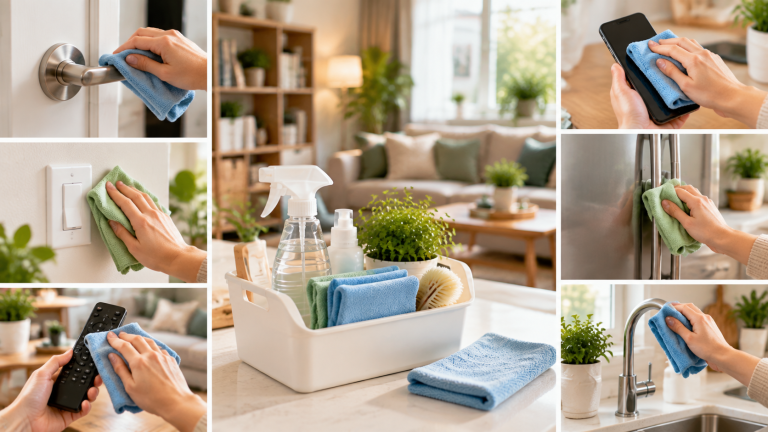
When time is limited, clean the parts of the home that influence comfort and hygiene most: kitchen work surfaces, bathroom fixtures, high-touch areas, visible dust, and high-traffic floors. Baseboards, cabinet interiors, decorative shelves, and hidden corners can be handled on a rotating basis. A practical room-by-room cleaning checklist can help you distinguish regular tasks from occasional deep-cleaning jobs so you do not accidentally turn every session into a full-house project. This priority system is one of the fastest ways to reduce cleaning time because not every surface needs equal attention every week. Work from top to bottom and clear clutter before wiping surfaces so you do not repeat steps. By focusing on visible and frequently used areas first, you can create a noticeably cleaner home even when your schedule only allows a modest amount of time.
Use Short Timed Sessions to Prevent Overcleaning
A timer is useful because it creates a stopping point. Choose one task, work steadily for ten or fifteen minutes, and end the session when the time is up rather than expanding into unrelated chores. You can reset the kitchen, refresh a bathroom, clear surfaces, or vacuum high-traffic paths in a short block. For more examples, 15-minute cleaning habits that make a big difference offers focused routines that fit into busy days. Timed cleaning works best when supplies are easy to access and the target is specific. “Clean the house for fifteen minutes” is too vague; “clear and wipe the kitchen counters” gives you a clear finish line. Short sessions also prevent perfectionism from turning one small task into an exhausting project. Several focused resets across a week often produce better maintenance than one large session followed by days of avoidance.
Reduce Clutter So Cleaning Requires Fewer Steps
Cleaning takes longer when every surface must be cleared before you can reach it. Reducing visible clutter and giving everyday items easy homes can save more time than buying faster cleaning tools. Keep counters relatively open, limit decorative objects in areas that collect dust, and use baskets or trays to contain small categories. If a room regularly becomes difficult to clean because belongings cover the floor or furniture, address the storage system separately from the cleaning routine. You may need fewer items, easier access, or a better drop zone. The objective is not minimalism; it is removing unnecessary setup from routine cleaning. When you can wipe a table without relocating ten objects and vacuum a floor without moving several piles, the same job takes much less time. Organization and cleaning support each other, and improving one often reduces effort in the other.
Keep Supplies Where the Work Happens
A large portion of cleaning resistance comes from setup. If every task requires finding a spray bottle, searching for a cloth, carrying equipment between floors, and returning everything afterward, even a small job feels larger. Store basic supplies near the rooms where they are used when it is safe to do so, especially bathroom cloths, toilet tools, kitchen wipes, or a lightweight hand vacuum. In homes with children or pets, always prioritize secure storage and product safety over convenience. A portable cleaning caddy can also reduce trips when one set of supplies serves several areas. Keep the collection simple so you know what each product is for and do not waste time choosing between many similar options. Reducing the friction of starting makes quick cleaning more likely, and those quick tasks prevent larger buildup that would otherwise require much more effort later.
Share Clear Responsibilities Instead of Asking for “Help”
In a shared household, cleaning becomes more sustainable when responsibilities are specific and predictable. Instead of one person noticing every mess and asking others to help, assign clear recurring outcomes such as emptying the dishwasher, wiping the table after dinner, handling one bathroom, taking out trash, or vacuuming a particular area. Responsibilities can rotate, but everyone should understand what completion looks like. This reduces the invisible work of monitoring and reminding. Keep standards realistic for the age and ability of each household member, and simplify systems when people consistently struggle to follow them. A clean home should not depend on one person spending the entire day restoring spaces after everyone else. Shared routines may not produce identical results, but they distribute maintenance and make it easier for the household to return to baseline without a single person carrying the full workload.
Protect Your Time With a “Good Enough” Standard
Perfection can quietly turn routine cleaning into an all-day activity. Decide what clean enough means for normal life and reserve detailed work for occasional sessions. A bathroom can be hygienic without perfectly polished fixtures, a living room can be comfortable with a folded blanket on the sofa, and a kitchen can be ready for morning even if one pan is drying. This standard is not an excuse to ignore important hygiene or safety issues. It is a way to distinguish necessary maintenance from cosmetic details that can wait. Ask whether another five minutes will meaningfully improve how the room functions. If not, stop and move on. Protecting your time makes consistency more likely because cleaning no longer threatens to consume the rest of the day. A sustainable home routine should leave room for rest, work, family, hobbies, and everything else the home is meant to support.
Conclusion: Make Cleaning Predictable, Short, and Focused
The most effective way to keep your house clean without cleaning all day is to build a system that prevents several categories from becoming urgent at once. Use a weekly rhythm for larger chores, a short daily routine for maintenance, and high-impact priorities when time is limited. Timed sessions create clear stopping points, while reduced clutter and conveniently stored supplies make each task faster to start and finish. In shared homes, specific responsibilities distribute the work and reduce the need for one person to constantly manage the environment. Most importantly, define a realistic “good enough” baseline. Your house does not need to look untouched to be clean, functional, and welcoming. When routines are predictable and small messes are handled before they multiply, cleaning becomes one part of daily life rather than an activity that takes over the entire day.