
How to Reduce Clutter in a Small Apartment
Clutter is more noticeable in a small apartment because there is less unused space between everyday objects. A few packages on the floor, clothes on a chair, or kitchen tools spread across the counter can make the entire home feel crowded. The answer is not to eliminate everything you own or hide every object in a storage container. It is to make deliberate choices about volume, placement, and accessibility so the apartment can support daily life without constant rearranging. Start by protecting the spaces that allow the home to function: walking paths, the bed, the main kitchen counter, seating, and a clear place to eat or work. Then reduce what competes with those functions and create simple homes for the belongings you use most. In a compact apartment, even small improvements have a large effect because every recovered surface or shelf increases breathing room.
Make Space Before You Buy Storage
When an apartment feels cluttered, the first impulse is often to buy bins, shelves, or a larger cabinet. Storage can help, but adding it before reducing excess may simply make the room more crowded. Begin by removing trash, packaging, broken items, obvious duplicates, and belongings that no longer fit your routine. Then evaluate whether the remaining categories genuinely need more capacity. If the apartment still feels tight, focus on how the room is arranged. The guide on how to make a small home feel bigger and more organized explains how clear walking paths, visual continuity, selective closed storage, and better furniture choices can improve the sense of space before you add more organizers. Creating room first ensures that any storage solution you eventually choose solves a real problem rather than becoming another object to manage.
Use Hidden and Vertical Areas for the Right Categories
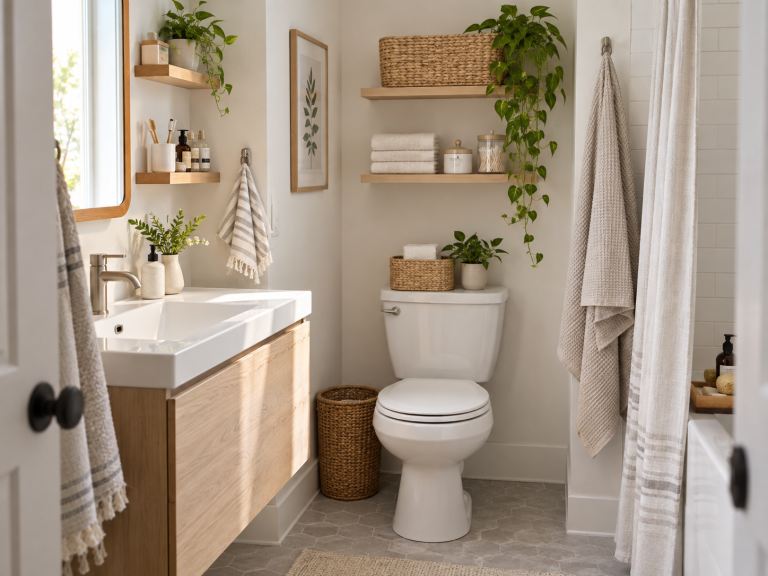
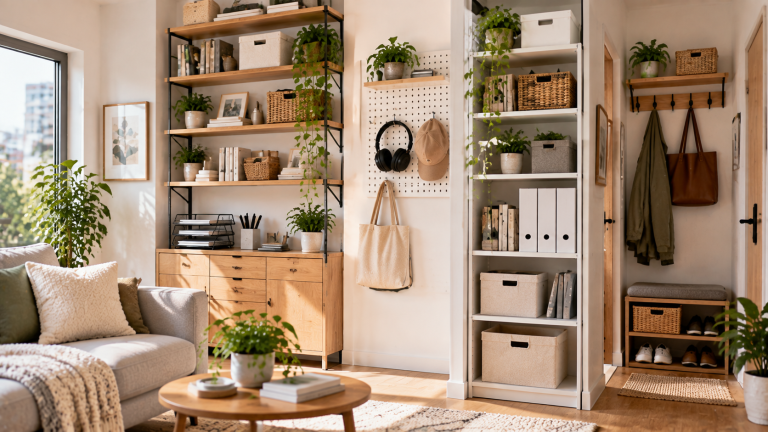
Once you know what deserves to stay, use storage areas according to frequency. Under-bed containers can hold seasonal clothing or spare linens, high shelves can store lightweight occasional items, and the backs of doors can support selected daily accessories. Everyday belongings should remain in the easiest locations so they do not end up on surfaces. If you need ideas for increasing capacity without sacrificing floor space, 15 smart storage ideas for small spaces covers door storage, cabinet risers, hooks, pegboards, rolling carts, multifunctional furniture, and other flexible options. Use these tools selectively. Filling every wall and hidden gap can create a home that technically stores more but feels visually dense and difficult to access. Smart storage should reduce friction and keep the room easier to use, not simply increase the number of possessions it can contain.
Treat the Bedroom as a Rest Space, Not Overflow Storage
In small apartments, the bedroom often becomes the place where items from other rooms are hidden. This can make the home look better temporarily but leaves the sleep area crowded with bags, laundry, paperwork, and boxes. Protect the bed, main walking route, closet access, and one clear bedside surface. Clothing should fit within realistic storage limits so clean laundry can be put away without forcing drawers or creating piles. The article on how to organize a small bedroom without making it feel crowded provides a detailed approach to layout, wardrobe editing, under-bed storage, furniture selection, and evening resets. When the bedroom remains calm, you preserve one area of visual relief inside a compact home, which can make the entire apartment feel less overwhelming even when other spaces are temporarily active.
Protect Kitchen Counters From Becoming General Storage
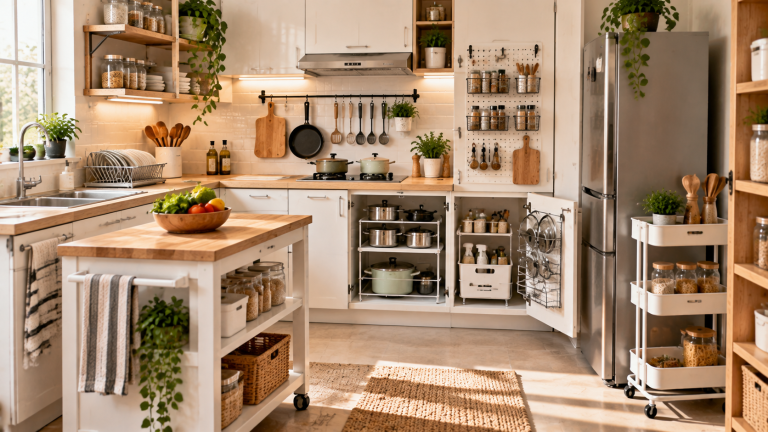
A small kitchen counter can disappear quickly beneath mail, appliances, bags, groceries, and items that have no kitchen purpose. Decide which section must remain available for food preparation and return unrelated objects elsewhere as soon as practical. Limit permanent countertop equipment to what you use often, and group daily cooking items on a small tray if they need to remain visible. For more targeted solutions, small kitchen organization ideas that maximize every inch explains activity zones, cabinet organizers, vertical surfaces, pantry systems, and ways to control bulky kitchen gear. Protecting work space is especially important in an apartment because the kitchen may also be visually connected to the living area. A clear counter improves both cooking function and the overall appearance of the room, giving you more benefit than adding decorative storage to an already crowded surface.
Choose Furniture That Replaces More Than It Adds
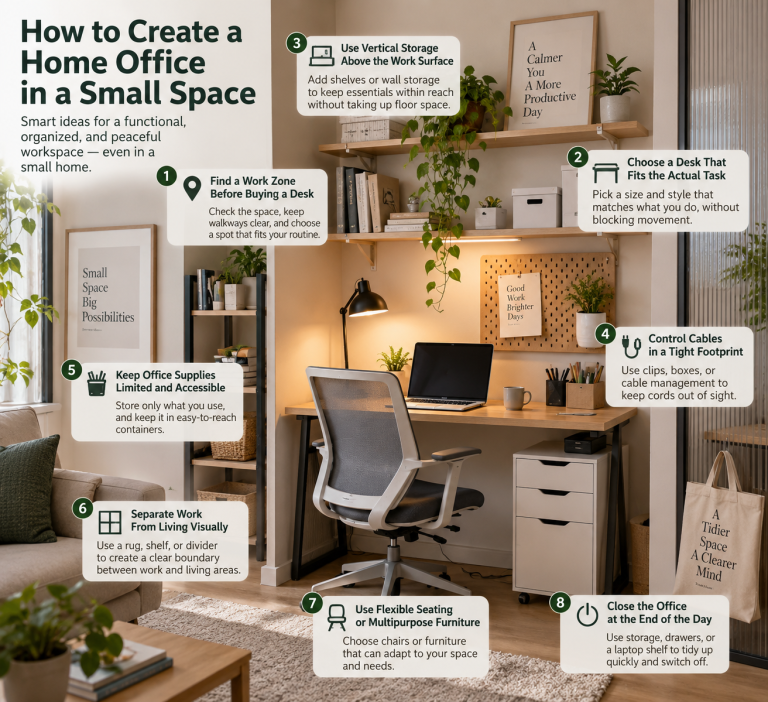
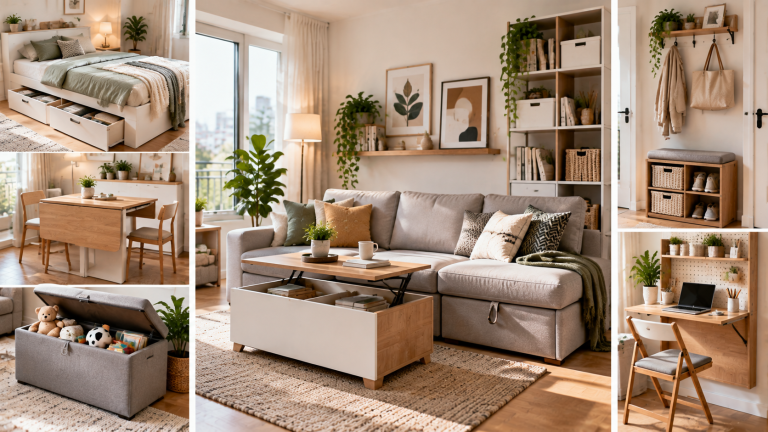
Furniture can solve clutter or create it. In a small apartment, avoid adding a piece unless it provides enough function to justify the floor area it occupies. A storage ottoman can replace a separate blanket basket, a bench can combine seating and shoe storage, and a desk with drawers may eliminate the need for an extra cabinet. However, multifunctional furniture is only useful when you actually use its functions. Measure walking paths, door swings, and drawer clearance before bringing anything new into the room. Consider removing one underused furniture piece if a room feels crowded even after decluttering. Several small tables and racks can create more visual fragmentation than one appropriately sized piece. The objective is not to own tiny furniture; it is to create a layout where each item supports a real activity and leaves enough open floor for the apartment to feel navigable.
Create Limits for Categories That Expand Easily
Some categories grow quietly because each individual item seems harmless. Reusable bags, mugs, beauty products, notebooks, cables, books, pantry snacks, hobby supplies, and decorative objects can all exceed the space available. Give expanding categories a physical boundary such as one shelf, one basket, or one drawer. When the boundary is comfortably full, review the category before adding more. This rule removes the need to decide from scratch every time because the storage itself provides feedback. Choose a boundary that reflects real use rather than an artificially tiny limit. The goal is not deprivation; it is preventing one category from taking space needed by another. In a small apartment, boundaries are especially valuable because overflow quickly becomes visible on counters, floors, and furniture. Keeping categories within assigned space protects the apartment’s overall balance without requiring frequent large decluttering sessions.
Control What Enters Through the Door
Reducing clutter becomes much easier when incoming volume is managed. Packages, promotional items, receipts, groceries, gifts, and new purchases all need a destination. Recycle packaging promptly, keep one small location for papers that require action, and decide where a new item will live before buying it when possible. If you bring in a bulky object or a duplicate category, consider whether something else can leave. Keep a donation bag in a closet or other convenient location and remove it from the apartment when full. This creates an ongoing exit route so decluttering does not depend on occasional major purges. You do not need a strict one-in-one-out rule for every item, but awareness of incoming volume matters when storage is limited. The apartment remains easier to maintain when belongings enter slowly enough for your existing systems to absorb them without immediately overflowing.
Use a Daily Five-Minute Reset for Visible Clutter
Small apartments can shift from calm to cluttered quickly, but they can often recover quickly too. Spend five minutes at a predictable time returning visible items to their homes, clearing the main counter, folding a blanket, putting shoes away, and collecting anything that belongs in another zone. Focus on the objects that affect how the apartment looks and functions rather than opening drawers or beginning a deep-clean task. If one item repeatedly remains out because its official home is inconvenient, change the storage location. The reset should become easier over time as systems improve. This habit prevents temporary mess from combining across several days, which is when a small apartment begins to feel difficult to manage. A short reset cannot solve excessive volume, but once clutter has been reduced, it is one of the simplest ways to protect the space you worked to create.
Conclusion: Protect Open Space as a Valuable Resource
The most effective way to reduce clutter in a small apartment is to treat open space as something valuable rather than something waiting to be filled. Declutter before adding storage, use hidden and vertical areas for appropriate low-frequency categories, and protect the bedroom, kitchen counters, and main walking paths from becoming overflow zones. Choose furniture that earns its footprint, create limits for categories that expand easily, and manage what enters the home so storage is not constantly under pressure. A five-minute daily reset can then maintain the visible results without turning organization into a major routine. Small apartments do not require perfect minimalism, but they do require clearer priorities because every object competes for limited capacity. When your belongings support the way you actually live and the apartment has enough breathing room to absorb daily activity, the entire space feels calmer, larger, and easier to maintain.