How to Clean Floors Properly Without Wasting Time
Housework becomes much more manageable when every task has a clear purpose and finish line—a useful distinction when cleaning floors properly without wasting time. For cleaning floors properly without wasting time, that means knowing what needs attention now, what can wait, and which small habits prevent buildup between scheduled cleans. The aim is not to polish every surface on every pass—a useful distinction when cleaning floors properly without wasting time. It is to keep the home sanitary, comfortable, and ready for normal use without wasting effort on details that are already fine—a useful distinction when cleaning floors properly without wasting time. Use the steps below to create a routine that suits the way your household actually lives—a useful distinction when cleaning floors properly without wasting time. Keep products safe, follow surface-specific guidance, and shorten the routine when necessary rather than abandoning it because the ideal version does not fit the day—a useful distinction when cleaning floors properly without wasting time.
Match the Method to the Flooring
For matching the method to the flooring, speed comes from order of operations rather than rushing through the job. Tasks around entry paths often take longer when the area is not cleared first or the right tool is stored somewhere else. Gather what you need, remove loose items, and work through the area in one direction so you do not repeatedly cross the room—a useful distinction when matching the method to the flooring. Finish by returning supplies and leaving the area ready for normal use; that closure makes the next session easier to start—a useful distinction when matching the method to the flooring. The goal is a clean, usable result with enough energy left for the rest of your schedule—a useful distinction when matching the method to the flooring.
Clear Loose Objects Before You Start
Clearing loose objects before you start saves time when the task has a clear beginning, sequence, and stopping point. Visible buildup around entry paths or kitchen floor is a better cue than an oversized checklist that assumes every room needs the same treatment. Focus the first pass on entry paths and kitchen floor, then use any remaining time for lower-priority details instead of expanding the whole session. Short maintenance between scheduled cleans can keep entry paths and kitchen floor from reaching the point where they feel urgent at the same time. If you want to extend this idea to another part of the home, How to Clean High-Touch Surfaces Without Overdoing It offers a practical next reference.
Vacuum or Sweep Before Wet Cleaning
The easiest way to approach vacuum or Sweep Before Wet Cleaning is to separate routine maintenance from the deeper work that can wait. Areas involving entry paths, kitchen floor, and rugs tend to need attention at different rates, so treating every surface equally wastes effort. Focus the first pass on entry paths and kitchen floor, then use any remaining time for lower-priority details instead of expanding the whole session—a useful distinction when vacuum or Sweep Before Wet Cleaning. Finish by returning supplies and leaving the area ready for normal use; that closure makes the next session easier to start—a useful distinction when vacuum or Sweep Before Wet Cleaning. Done this way, vacuum or Sweep Before Wet Cleaning becomes a contained task instead of something that expands across the whole day.
Focus on High-Traffic Paths
For focusing on high-traffic paths, speed comes from order of operations rather than rushing through the job. Tasks around entry paths often take longer when the area is not cleared first or the right tool is stored somewhere else—a useful distinction when focusing on high-traffic paths. Use the product only where it is suited to the material, allow any required contact time, and wipe with a clean cloth rather than adding more product—a useful distinction when focusing on high-traffic paths. Use the condition of the area to adjust the rhythm—a useful distinction when focusing on high-traffic paths. A repeatable method will usually keep the home cleaner over a month than an occasional marathon session—a useful distinction when focusing on high-traffic paths.
Use Less Water Than You Think on Many Floors
The easiest way to approach using less water than you think on many floors is to separate routine maintenance from the deeper work that can wait. Frequent light care of entry paths and kitchen floor usually prevents the kind of buildup that later requires scrubbing or a long recovery session. Focus the first pass on entry paths and kitchen floor, then use any remaining time for lower-priority details instead of expanding the whole session—a useful distinction when using less water than you think on many floors. Track what actually becomes dirty over a few weeks and build the routine around that evidence rather than a generic daily checklist—a useful distinction when using less water than you think on many floors. The goal is a clean, usable result with enough energy left for the rest of your schedule—a useful distinction when using less water than you think on many floors.
Clean Edges and Corners on a Rotation
Cleaning edges and corners on a rotation is more efficient when you prepare the area first instead of cleaning around clutter and supplies. Frequent light care of entry paths and kitchen floor usually prevents the kind of buildup that later requires scrubbing or a long recovery session—a useful distinction when cleaning edges and corners on a rotation. Use the product only where it is suited to the material, allow any required contact time, and wipe with a clean cloth rather than adding more product—a useful distinction when cleaning edges and corners on a rotation. On a busy day, a basic version can be enough: contain the mess, clean the most-used surface, and leave the detailed work for its scheduled turn—a useful distinction when cleaning edges and corners on a rotation. The goal is a clean, usable result with enough energy left for the rest of your schedule—a useful distinction when cleaning edges and corners on a rotation. This step also connects naturally with Simple Deep Cleaning Checklist for Every Season, especially if the same friction appears in more than one room.
Handle Spots Before They Spread
Handling spots before they spread is more efficient when you prepare the area first instead of cleaning around clutter and supplies. Frequent light care of entry paths and kitchen floor usually prevents the kind of buildup that later requires scrubbing or a long recovery session—a useful distinction when handling spots before they spread. Handle dry debris first, then wipe or wash the appropriate surfaces, and leave floors until the end so fallen dust is collected once—a useful distinction when handling spots before they spread. Track what actually becomes dirty over a few weeks and build the routine around that evidence rather than a generic daily checklist—a useful distinction when handling spots before they spread. Consistency matters more than intensity; a sensible sequence makes the same amount of effort go further—a useful distinction when handling spots before they spread.
Let Floors Dry Without Creating New Footprints
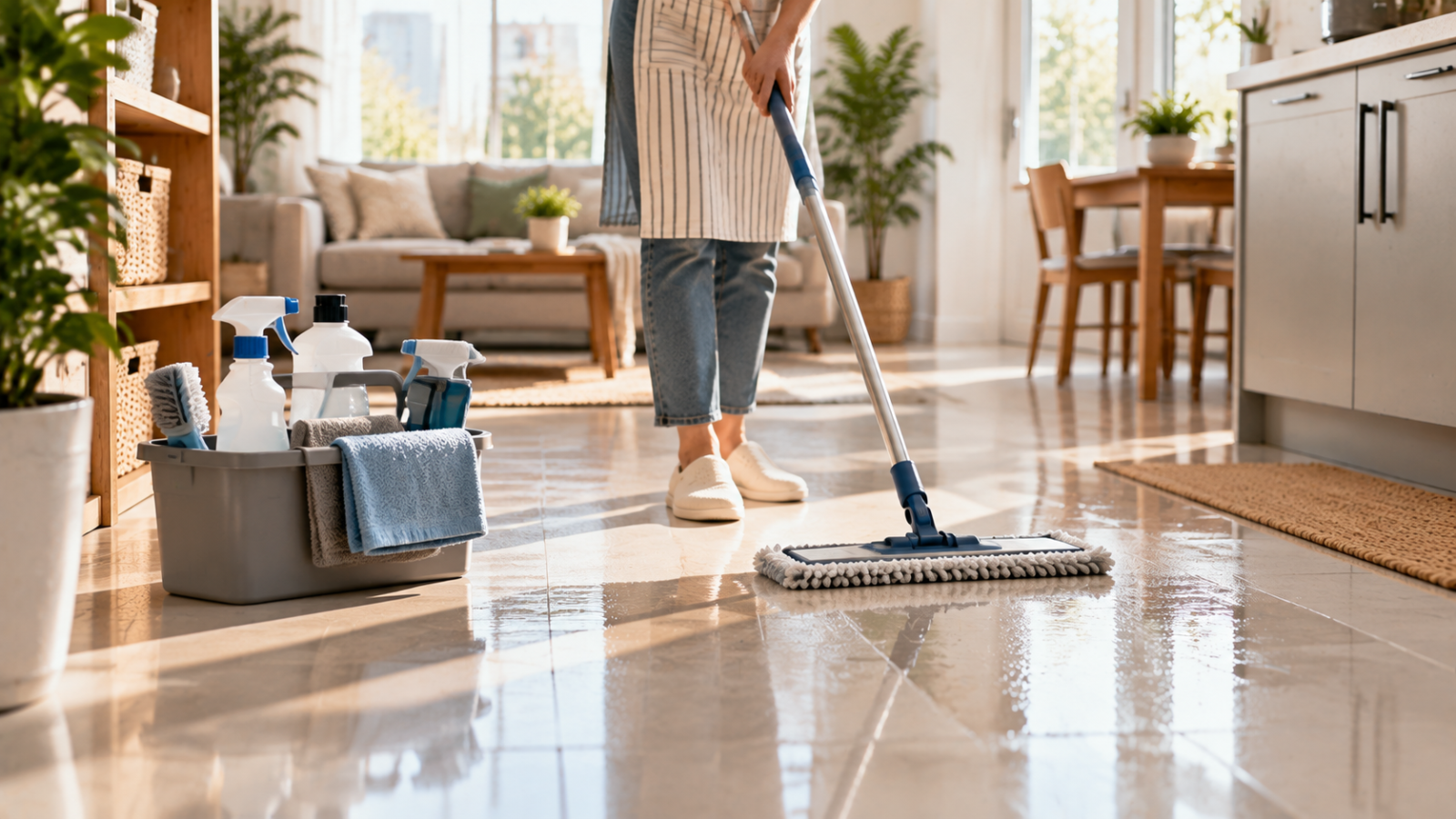
Letting floors dry without creating new footprints is more efficient when you prepare the area first instead of cleaning around clutter and supplies. Tasks around entry paths often take longer when the area is not cleared first or the right tool is stored somewhere else—a useful distinction when letting floors dry without creating new footprints. Handle dry debris first, then wipe or wash the appropriate surfaces, and leave floors until the end so fallen dust is collected once—a useful distinction when letting floors dry without creating new footprints. Track what actually becomes dirty over a few weeks and build the routine around that evidence rather than a generic daily checklist—a useful distinction when letting floors dry without creating new footprints. Consistency matters more than intensity; a sensible sequence makes the same amount of effort go further—a useful distinction when letting floors dry without creating new footprints.
Conclusion
A dependable approach to cleaning floors properly without wasting time comes from consistency, not intensity. Prioritize the surfaces that affect daily use, keep tools easy to reach, and let deeper details rotate instead of treating every clean as a top-to-bottom project—a useful distinction when cleaning floors properly without wasting time. If a task repeatedly takes too long, change the setup or frequency before assuming you need to work faster—a useful distinction when cleaning floors properly without wasting time. Short maintenance sessions prevent several categories from becoming urgent at once, which is where most of the time savings appear—a useful distinction when cleaning floors properly without wasting time. A clean home should support the rest of your life, so use a routine with a clear finish line and enough flexibility to shrink during demanding weeks—a useful distinction when cleaning floors properly without wasting time.