
How to Organize a Small Bedroom Without Making It Feel Crowded
A small bedroom has to perform several important jobs in limited space: support sleep, store clothing, provide a place to get ready, and sometimes accommodate work or study. The room quickly feels crowded when storage solutions are added without reducing competing furniture or visual clutter. The best approach is to protect the bedroom’s primary purpose first and then use storage that fits around it. You do not need to hide every object or choose only tiny furniture. You need clear walking paths, enough room to make and use the bed, accessible clothing storage, and a few surfaces that remain mostly open. By editing what stays in the room and matching storage to frequency of use, you can create more function without making the bedroom feel like a storage unit. The result should be easier to reset at night and calmer to wake up in.
Start With the Bed and Walking Space
The bed is usually the largest object in a small bedroom, so its position determines how the rest of the room functions. Place it where you can access the necessary sides, open doors and drawers, and move between the entrance and closet without awkward turns. Centering the bed is not always the best choice; in very compact rooms, placing one side closer to a wall may create a more useful walking path or allow a dresser to fit. Consider how you make the bed, whether two people need access, and where electrical outlets are located. Once the bed is positioned, avoid filling the remaining floor with many small tables and storage units. One narrow nightstand or wall-mounted shelf may be enough. Protecting circulation creates a sense of space that no extra organizer can replace, and it makes daily cleaning easier.
Edit the Wardrobe Before Adding Closet Organizers
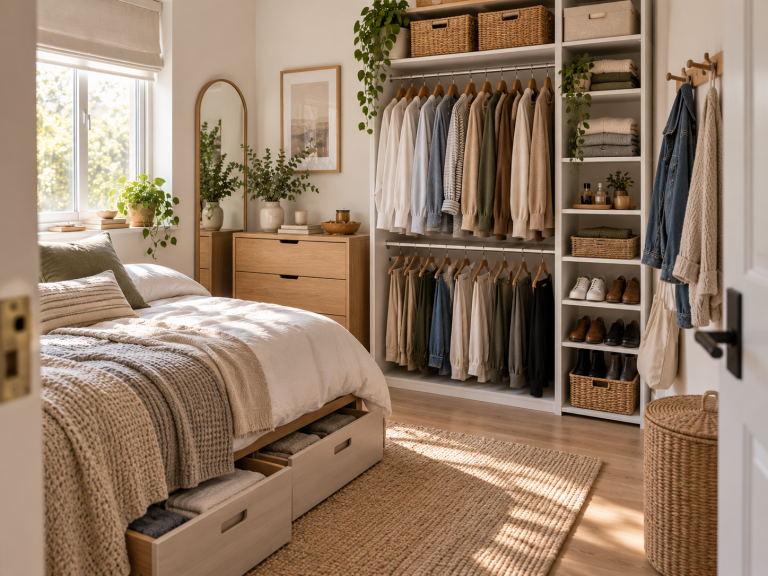
A small closet cannot become functional if it is expected to hold clothing that no longer fits your current life. Before buying hangers, shelves, or drawer inserts, remove worn-out items, uncomfortable pieces, duplicates you rarely choose, and clothing that belongs to another season if alternative storage is available. Group similar garments together so you can see quantity clearly. Then assign the easiest closet areas to frequently worn pieces. Special-occasion items can move higher or farther back, while daily clothes should be simple to reach and return. Avoid forcing drawers to close or compressing hanging clothes so tightly that you cannot browse them. A little breathing room is valuable because it shortens the time required to put laundry away. Closet organization should make dressing easier, not simply maximize how many items can physically fit inside a limited space.
Use Under-Bed Storage for Low-Frequency Categories
The area beneath the bed can provide excellent hidden storage, but it should be used thoughtfully. Choose categories that are not needed every day, such as off-season clothing, spare bedding, travel bags, or sentimental items you want to keep protected. Use low containers that slide easily and label them so you know what is inside without pulling everything out. If the bed has built-in drawers, check that they can open fully without hitting walls or other furniture. Avoid storing random objects under the bed simply because they are out of sight; hidden clutter can still make the room difficult to manage when you eventually need something. Keeping low-frequency categories there frees the closet and dresser for everyday clothing, which is a better use of the most accessible storage. It also reduces the temptation to add another freestanding cabinet that would crowd the floor.
Keep the Nightstand Minimal and Functional
Nightstands often become miniature storage areas for everything from receipts and chargers to books, skincare, cups, and random small objects. In a compact bedroom, this visible clutter can make the room feel much busier than it is. Decide what you genuinely need within reach of the bed, such as a lamp, water, current book, glasses, or phone charger, and give everything else another home. A small drawer or basket can contain a few essentials without covering the top surface. If there is no room for a traditional table, consider a wall-mounted shelf or narrow ledge, provided it is installed securely. Keep charging cables controlled so they do not spread across the floor or bed. A clear, functional bedside area supports the evening routine and helps the room feel settled, which is especially important when the bedroom has limited visual breathing room elsewhere.
Use the Walls for Selected Storage, Not Every Category
Vertical storage can be helpful in a small bedroom because it protects floor space, but too many wall-mounted systems can make the room feel enclosed. Choose one or two areas where vertical storage will solve a specific problem. Hooks near the closet can hold tomorrow’s outfit or a frequently used bag, while a shelf above a desk can store a small number of books or supplies. The space above a dresser may support a mirror or shallow shelf, but avoid layering storage on every available wall. Keep heavier or visually busy categories behind closet doors or in drawers when possible. The room should still have blank wall areas so the eye can rest. Vertical storage is most successful when it removes items from chairs and floors without turning the walls into a dense display of everything the room contains.
Choose Furniture That Earns Its Footprint
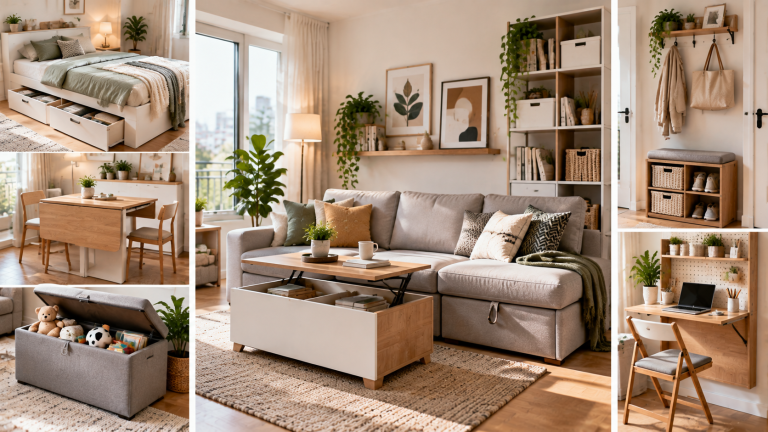
Every piece of furniture in a small bedroom should provide enough value to justify the space it occupies. A dresser may be essential if the closet is limited, but a decorative bench at the foot of the bed may not be worth losing the walking space. A desk can be necessary for work, yet a slimmer model or wall-mounted option may serve the same purpose with less visual weight. Look for pieces that combine functions naturally, such as a bed with drawers, a nightstand with useful storage, or a desk that can also serve as a dressing surface. Avoid buying multifunctional furniture merely because it has many features; the functions should match activities you actually do. Measure doors, drawer clearance, and movement paths before adding anything. Reducing one unnecessary furniture piece can make a greater difference than purchasing several new organizers designed to squeeze belongings into the remaining gaps.
Protect the Dresser Top and Other Visible Surfaces
Visible surfaces strongly influence whether a small bedroom feels calm. A dresser covered with cosmetics, folded clothing, receipts, bottles, and accessories creates a large field of visual detail even if the floor is clear. Limit the surface to a few intentional items and one small tray or container for things used during the daily routine. Store backups, rarely used products, and unrelated categories elsewhere. If cosmetics or grooming items need to remain in the bedroom, dedicate one drawer or portable container so they can be returned quickly. The same principle applies to windowsills, shelves, and desks. You do not need empty surfaces, but you need enough open area for the room to feel breathable and for cleaning to be easy. When wiping a dresser requires moving twenty objects, the storage system is creating unnecessary maintenance and should be simplified.
Create a Five-Minute Evening Reset
A small room shows clutter quickly because there is less open space to absorb temporary items. A five-minute evening reset can prevent clothing, cups, books, and work materials from accumulating across several days. Put dirty clothes in the hamper, hang or fold anything you plan to wear again, return bedside items, clear the main walking path, and prepare one or two things for the next morning. Do not turn the reset into deep cleaning or closet reorganization. The purpose is simply to return the room to a comfortable baseline before sleep. If one category repeatedly remains out because storage is difficult, adjust the location later. Small-bedroom organization becomes sustainable when the reset is easier than leaving the clutter in place. A short nightly habit protects the calm atmosphere you created without requiring a long weekend cleanup.
Conclusion: Give the Room More Breathing Room, Not More Stuff
To organize a small bedroom without making it feel crowded, begin with the layout and protect the bed, closet access, and main walking paths. Edit clothing before adding organizers, use under-bed space for low-frequency categories, and keep bedside and dresser surfaces intentionally limited. Vertical storage can help, but use it selectively so the walls do not become visually heavy. Most importantly, make every furniture piece earn its footprint and avoid solving each storage problem with another object on the floor. A small bedroom works best when daily items are easy to reach and easy to put away, while occasional belongings move to less convenient zones. Add a brief evening reset to maintain that balance. The room may remain compact, but it can still feel restful, functional, and spacious enough for the activities that truly belong there.