
How to Create an Organized Home That Is Easy to Maintain
Creating an organized home is only half the challenge. The real test is whether the systems still work after a busy week, a grocery trip, laundry day, visitors, or a period when you simply have less energy. Sustainable organization is different from a one-time makeover because it is designed around maintenance from the beginning. That means reducing unnecessary volume, placing belongings close to where they are used, creating obvious homes for everyday items, and leaving enough capacity for things to move in and out naturally. Instead of asking how to make every room look perfect, ask how quickly each room can return to a comfortable baseline. When organization is built around realistic behavior, maintenance stops feeling like a separate project and becomes part of ordinary routines. The result is a home that can recover from mess without requiring constant attention.
Begin With a Clear Organizing Baseline
Before adding storage or creating new routines, decide what “organized enough” means for your household. You may want kitchen counters mostly clear, shoes contained near the entrance, laundry off the bedroom floor, and paperwork limited to one action tray. These are functional standards, not decorating rules, and they give you a realistic target to return to. If you are still unsure how to begin the larger process, the step-by-step guide on how to organize your home when you don’t know where to start can help you choose the first zone and establish an order of operations. A baseline is useful because homes naturally become temporarily messy. You do not need to prevent every item from being out of place; you need to know what a successful reset looks like so the space can recover quickly.
Reduce Volume Until Storage Has Breathing Room
Maintenance becomes difficult when cabinets, drawers, and closets are packed so tightly that putting one object away requires rearranging several others. Decluttering creates the capacity that organization needs. Instead of treating it as a separate aesthetic project, use it to make storage easier to operate. Remove duplicates, broken items, things that no longer fit your routine, and belongings you consistently avoid using. Work gradually if necessary, especially with emotional categories. A useful method is to go space by space using the practical process in how to declutter your home room by room, which focuses on the function of each area rather than arbitrary rules. Aim to leave a little open space in high-use storage. That buffer makes groceries, clean laundry, and daily movement easier to absorb without creating new piles.
Design Storage Around Natural Behavior
The most maintainable storage location is usually close to where an item is already used or dropped. If family members place bags near the entrance, give bags hooks there. If mail lands on the kitchen counter, create a small paper station nearby instead of expecting everyone to carry documents to a distant office. This principle reduces the number of steps required to complete everyday actions. Keep high-frequency items at comfortable height and in containers that open easily, while seasonal or rarely used belongings can occupy harder-to-reach spaces. Avoid systems that require perfect folding, exact stacking, or several lids for items that are handled every day. A good system should still work when someone is in a hurry. Observe where clutter repeatedly appears and treat that location as information. Often the most effective organization improvement is not more discipline but moving the official home of an object closer to its natural path.
Use Simple Systems Instead of Highly Specific Categories
Maintenance improves when categories are broad enough to understand at a glance. A bin labeled “snacks” is easier to use than several narrow categories that need constant re-sorting. The same idea applies to toys, office supplies, bathroom products, and cleaning tools. Create only as much structure as the category genuinely needs. For additional examples of flexible storage, the article on home organization ideas for a calm and clutter-free space explains how zones, vertical storage, baskets, and drawer dividers can reduce friction without overcomplicating the home. Simple systems also adapt better when your routine changes. If a category grows, you can adjust one container rather than redesigning an entire labeling scheme. The purpose of organizing is to support memory and movement, not to create another set of rules that requires daily management.
Create Daily Closing Routines for High-Traffic Areas
A few short resets can protect the entire home from accumulated disorder. Choose predictable transition points rather than relying on motivation. After dinner, reset the kitchen enough that the sink and main preparation area are ready for morning. Before bed, gather objects from the living room and return them to their zones. When arriving home, place keys, bags, and shoes in their landing areas before moving deeper into the house. These routines can take only a few minutes because the storage systems are already designed for fast return. If you want more ideas for building automatic maintenance into normal life, 10 simple daily habits that keep your home organized offers small actions that prevent clutter from becoming a larger weekend project. Consistent closure is often more effective than occasional deep organizing sessions.
Add a Weekly Reset for Tasks That Do Not Need Daily Attention
Some categories need regular maintenance but not constant attention. Choose one weekly reset period for paperwork, refrigerator leftovers, donation items, laundry overflow, bathroom supplies, and any relocation basket used during the week. Keep the session short enough to be repeatable, perhaps thirty to sixty minutes depending on the household. The purpose is to process anything that has exceeded the daily systems, not to deep clean the entire home. A weekly reset also gives you a chance to notice which organizing methods are failing. If one drawer is always overflowing or a basket constantly contains unrelated objects, adjust the storage before the problem grows. Think of this routine as system maintenance rather than tidying. A small amount of regular correction keeps the home responsive to changing needs and prevents temporary clutter from becoming a permanent feature of the room.
Control What Enters the Home
An organized home is easier to maintain when incoming volume is managed. Groceries, packages, clothing, children’s papers, promotional items, and gifts all require space and decisions. Before buying a new storage product, consider whether the category truly needs more capacity or whether excess items should leave. Use a simple pause for nonessential purchases: identify where the item will live and whether it replaces something you already own. Process packaging and receipts quickly so they do not remain on surfaces. Keep one donation container accessible so unwanted items can exit gradually rather than waiting for a major decluttering event. This is not about restricting everything you enjoy; it is about recognizing that every physical item creates a small maintenance responsibility. When you are selective about what enters, the systems you already built have more room to function and your home can absorb normal changes without feeling immediately crowded.
Make the System Easy for Other People to Follow
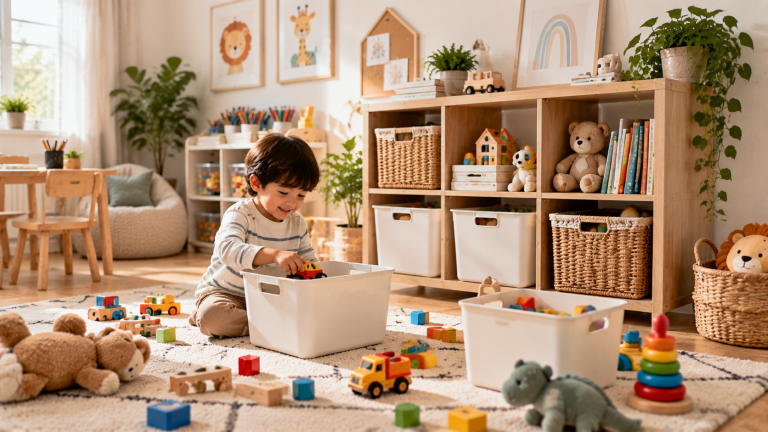
If several people share the home, maintenance must be understandable without one person acting as the organizer for everyone else. Use visible cues, broad labels, reachable storage, and categories that match how household members think about the items. Children may be more successful with one open basket for blocks than a complex toy-sorting system, while adults may need a single tray for documents requiring action. Invite feedback when a location repeatedly fails. The person who uses an item most often may have better information about where it should live. Shared organization is also easier when expectations are specific: “shoes stay on this rack” is clearer than “keep the entryway tidy.” The goal is not uniform behavior but predictable outcomes. When everyone can return belongings without asking where they go, the home is less dependent on one person’s memory and is far more likely to stay manageable.
Conclusion: Build a Home That Can Recover Quickly
The best way to create an organized home that is easy to maintain is to design for recovery rather than perfection. Give the household a clear baseline, reduce the amount of stuff until storage has breathing room, and locate belongings where they naturally fit into daily routines. Keep categories simple, use short closing routines for busy areas, and schedule a weekly reset for anything that needs more attention. Control incoming volume so your systems are not constantly overloaded, and make shared storage obvious enough that everyone can participate. Temporary mess is normal, especially in an active home. What matters is whether the space can return to order without hours of effort. When each item has an accessible home and your routines include small moments of closure, organization becomes less of a project and more of a supportive background system for everyday life.