
10 Simple Daily Habits That Keep Your Home Organized
A home rarely becomes cluttered because of one dramatic event. More often, disorder grows through dozens of tiny choices: a jacket dropped on a chair, a package left on the counter, a mug carried into another room, or mail placed down “for now.” The good news is that organization can improve in the same way, through small repeated actions. Daily habits work because they interrupt clutter before it becomes a larger project. They also reduce the need for marathon weekend cleanups that feel exhausting and difficult to maintain. The following habits are intentionally simple and flexible. You can adopt them gradually rather than changing your entire routine at once. When these actions become automatic, your home begins to reset itself through ordinary movement, and staying organized requires much less energy than repeatedly recovering from accumulated mess.
1. Make the Bed Before Leaving the Bedroom
Making the bed is not important because every bedroom must look perfect; it is useful because it creates an immediate visual reset and establishes a finishing cue for the morning. A made bed becomes a large clear surface that makes stray clothing, books, or laundry more noticeable, which helps prevent the room from drifting into disorder. Keep the habit simple by smoothing the sheets, pulling up the cover, and arranging pillows without aiming for hotel-level precision. If the routine takes more than two minutes, simplify the bedding rather than abandoning the habit. The value comes from repetition and from starting the day by completing one small task.
2. Put One Thing Away Every Time You Leave a Room
A powerful organizing habit is using movement you are already making. Whenever you leave a room, glance around for one item that belongs somewhere along your route. Carry an empty glass to the kitchen, take clean towels toward the bathroom, or bring a misplaced charger back to the desk. This approach avoids the mental resistance of a formal tidying session because the action is attached to something you were going to do anyway. It also stops small objects from accumulating into noticeable piles. The rule should remain light rather than rigid; you do not need to carry an armful every time you stand up. One item is enough to keep the home moving toward order.
3. Clear Flat Surfaces Before They Become Storage
Kitchen counters, dining tables, dressers, and entry consoles attract clutter because they are convenient places to set things down. Once several items gather on a surface, additional objects seem to belong there, and the pile grows quickly. Choose the most visible flat surfaces in your home and give each one a simple rule about what may remain permanently. A kitchen counter might hold only appliances used daily, while an entry table might keep a key tray and lamp. At least once a day, return anything else to its proper location. This habit works best when you do not overdecorate surfaces, because open space makes temporary clutter easier to notice.
4. Deal With Mail and Paper Immediately
Paper clutter becomes difficult because each piece represents a future decision. The easiest way to control it is to shorten the time between arrival and action. When mail enters the home, recycle obvious junk immediately, place bills or forms that require action in one designated tray, and file only documents you truly need to keep. Avoid creating several temporary paper piles in different rooms because they quickly become invisible background clutter. If a paper can be photographed or stored digitally without losing important information, consider whether the physical copy is necessary. The goal is not to process every complicated document at the front door, but to make one clear decision about its next step.
5. Reset the Kitchen After Each Main Meal
The kitchen can influence how organized the entire home feels because it is used so often and contains many small objects. After a main meal, complete a short reset instead of leaving every task for later. Put food away, load or wash dishes, wipe the main preparation area, and return frequently used ingredients or tools to their homes. This does not need to become deep cleaning; five to ten focused minutes is usually enough to prevent the room from reaching a point where starting feels difficult. A reset is especially useful after dinner because it gives the next morning a clean beginning. When you wake up to an available sink and open counter, breakfast and lunch preparation become easier.
6. Use the One-Minute Rule for Tiny Tasks
If an organizing task takes about a minute, doing it immediately can be more efficient than remembering it later. Hang up the coat, place the shoes on the rack, return the scissors to the drawer, throw away empty packaging, or refill the toilet paper holder while you are already there. These tasks seem insignificant individually, but postponing many of them creates visual noise and a growing mental list. The one-minute rule prevents small incomplete actions from becoming future projects. It also encourages you to design storage that makes fast completion possible. If putting something away consistently takes longer than it should, the problem may be the storage system rather than your motivation. Easy actions are easier to repeat, so use this habit as feedback about whether your home supports the behavior you want.
7. Give Bags, Shoes, and Keys a Consistent Landing Place
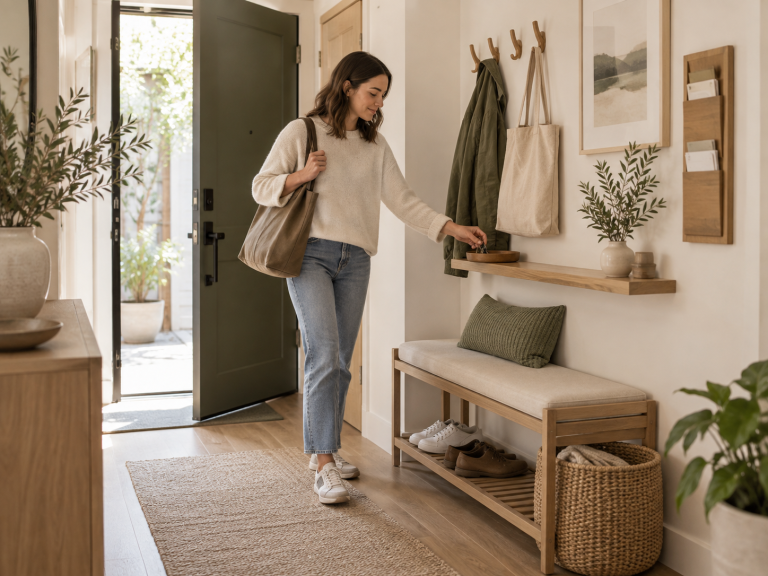
Items used when leaving the house cause frequent clutter because they move in and out every day. Decide exactly where bags, shoes, keys, wallets, and sunglasses should go when you come home. A small entry setup with hooks, a tray, and a limited shoe area can prevent these belongings from spreading across chairs, counters, and bedroom floors. The storage should be located where you naturally stop, not where an ideal floor plan suggests it should be. If you always drop keys near the kitchen door, place the tray there rather than expecting yourself to walk to another room. A consistent landing place also reduces stressful searches when you are in a hurry. Good organization is not only about appearance; it saves time by making the location of important everyday items predictable.
8. End the Day With a Ten-Minute Whole-Home Reset
A brief evening reset keeps small messes from carrying into the next day. Set a timer for ten minutes and move quickly through the main living areas, returning visible items to their homes rather than starting detailed cleaning. Straighten cushions, collect cups, fold a blanket, put toys into a basket, clear the entryway, and prepare anything needed for the morning. The timer prevents the routine from expanding into an exhausting late-night chore. If you share the home, this is also an easy habit to divide among family members because everyone can work on a different zone at the same time. The goal is not to finish every task but to reduce visual friction. Waking up to a reasonably reset home makes maintaining organization feel much easier and decreases the temptation to postpone tidying until the weekend.
9. Keep Donation and Relocation Baskets Ready
Clutter often remains because you know an item should leave its current location but you do not have time to complete the next step. Two simple containers can solve this problem. Keep a small donation bag or box in a convenient closet for useful items you no longer want, and use a relocation basket for objects that belong in other rooms. When the donation container is full, schedule its exit from the house rather than allowing it to become permanent storage. Empty the relocation basket during an evening reset or whenever you are already moving between rooms. These containers turn vague intentions into visible workflows. They also make decluttering part of normal life, because you can remove one item at a time instead of waiting for a large purge.
10. Prepare Tomorrow Before You Finish Today
Organization becomes easier when the next day starts with fewer decisions. Before going to bed, look at the upcoming morning and prepare only what will make it smoother. Place work materials together, set out exercise clothes, put a lunch container where you will see it, charge essential devices, or check that keys and bags are in their landing zone. This is not about planning every minute; it is about reducing predictable points of friction. The habit also encourages you to return items to appropriate places because you are thinking ahead rather than reacting while rushed. A few minutes of preparation can prevent frantic searching that leaves drawers open and belongings scattered.
Conclusion: Let Small Actions Carry the Work
The most sustainable daily habits to keep your home organized are the ones that fit naturally into routines you already have. Making the bed, clearing a surface, processing paper, resetting the kitchen, and returning one item while leaving a room may seem too small to matter, but their strength comes from frequency. These actions prevent clutter from reaching the stage where it requires hours of recovery. Start with two or three habits that solve your biggest daily frustrations and practice them until they feel automatic before adding more. Keep the standards realistic, especially during busy seasons. An organized home is not one where nothing is ever out of place; it is one where items have clear homes and small resets return the space to order quickly.