
15 Smart Storage Ideas for Small Spaces
Small-space storage works best when it adds capacity without adding clutter. The goal is not to fill every unused inch with containers; it is to give important belongings accessible homes while protecting walking paths, work surfaces, and visual breathing room. Before buying anything, identify the category causing the problem and measure the exact area where storage might fit. A clever product is only useful if it solves a real need and remains easy to use every day. The following ideas combine vertical space, hidden areas, multifunctional furniture, and simple category limits. You can apply only the solutions that match your home, whether you live in a studio, apartment, compact house, or a single crowded room.
1–2. Use the Back of Doors and the Space Above Them
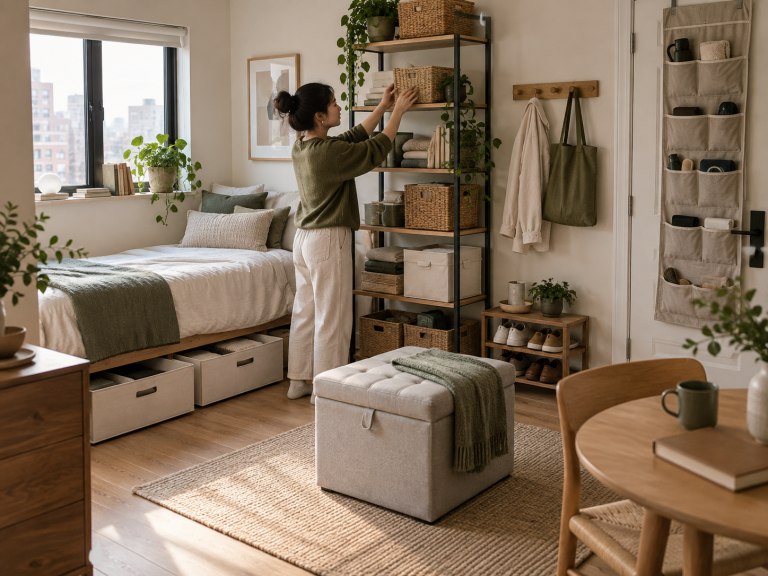
Doors provide vertical surfaces that often remain unused. Over-door hooks can hold bags, robes, towels, or lightweight accessories, while slim organizers may work for shoes, cleaning items, or pantry goods when the door and hardware can safely support them. Keep weight modest so the door operates normally and does not become overloaded. The wall area above a doorway can also hold a shallow shelf for books, baskets, or seasonal items, especially in rooms with high ceilings. This higher storage is best for belongings you do not need every day. Use secure installation appropriate to the wall material and avoid placing heavy objects where they could fall. These two locations can add capacity without reducing floor space, but they work best when categories are limited.
3–4. Choose Under-Bed Storage and Beds With Built-In Drawers
The area beneath a bed can hold a significant amount without taking additional room, making it ideal for off-season clothing, spare linens, luggage, or less-frequent items. Low rolling boxes are convenient when clearance allows, while zippered fabric containers can protect soft goods from dust. Label containers so you do not need to pull out every box to find one category. If you are replacing a bed, a frame with built-in drawers may provide more structured storage and reduce the need for a separate dresser. Consider how much space the drawers need to open and whether furniture placement will block them. Under-bed storage is less suitable for items used several times a day because repeatedly kneeling and moving containers can become inconvenient.
5–6. Add Shelf Risers and Stackable Solutions Inside Cabinets
Many cabinets waste vertical space between a short row of objects and the shelf above. Shelf risers create a second level for dishes, mugs, pantry cans, toiletries, or cleaning supplies without permanent construction. Stackable bins can provide a similar benefit when the category is lightweight and the containers remain easy to remove. Avoid stacking so high that you must unload several layers to reach the bottom. The purpose is to improve visibility and access, not simply increase density. In the kitchen, a riser can separate plates from bowls or create two levels of pantry items. In a bathroom, shallow stackable drawers can contain small products that otherwise become mixed together. Measure cabinet depth and height carefully, and leave some open capacity so new groceries or supplies can be put away without rearranging the entire shelf each time.
7–8. Use Wall-Mounted Hooks and Pegboards
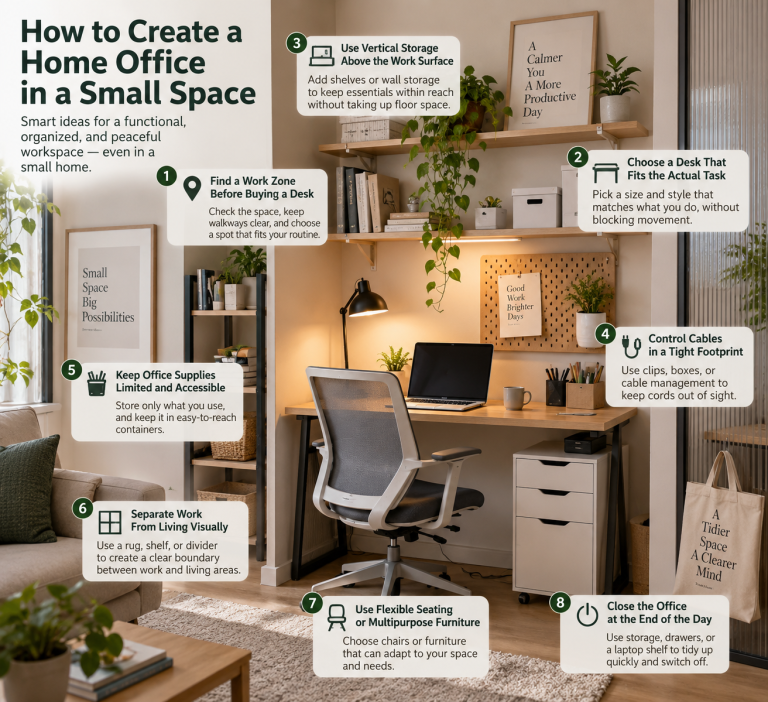
Hooks are among the simplest small-space storage tools because they turn narrow wall areas into useful vertical zones. They can hold coats, hats, bags, kitchen utensils, headphones, cleaning tools, or accessories depending on the room. A pegboard offers more flexibility because hooks, cups, and small shelves can be rearranged as needs change. This is particularly useful above a desk, craft station, workbench, or kitchen area where many lightweight tools need to remain visible. Do not cover every wall with hanging objects. Choose one intentional zone and keep the categories consistent so the system looks organized rather than chaotic. Install hardware safely and consider weight limits. Wall storage is most effective for frequently used items that benefit from quick access. Rarely used belongings should usually live in less visually prominent storage so the main room remains calm.
9–10. Select Ottomans and Benches With Hidden Storage
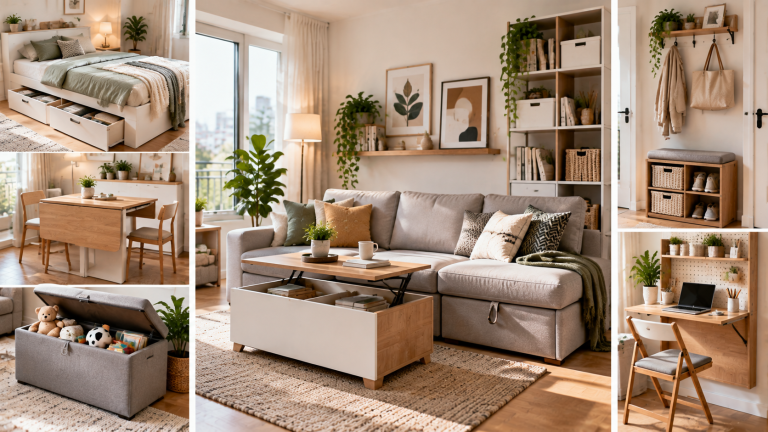
Multifunctional furniture can reduce the total number of pieces required in a small room. A storage ottoman can serve as a footrest, extra seat, and container for blankets or games. A bench with a lift-up seat can provide entryway seating while holding shoes, bags, or seasonal accessories. The best hidden-storage furniture has a category that naturally belongs near its location. Avoid filling it with random objects simply because space exists. Check how the lid opens, whether it is easy to lift, and whether the internal volume is practical for the items you intend to store. Large pieces should still fit the room comfortably and preserve walking paths. Multifunctional furniture is valuable when it replaces another storage unit, not when it becomes an additional bulky item. Measure before purchasing and prioritize pieces you will use for more than one genuine daily need.
11. Create a Narrow Rolling Cart for Flexible Storage
A slim rolling cart can fit beside a desk, between appliances, near a sofa, or in a bathroom where a permanent cabinet would be too large. It works best for a defined mobile category such as art supplies, coffee equipment, cleaning products, hair tools, or work materials. Because the cart can move, it can support an activity and then roll out of the way. Keep the top level for the most frequently used items and use small containers to prevent lower shelves from becoming mixed catch-all zones. Measure the cart and clearance carefully, especially if it will fit into a narrow gap. Wheels are only helpful when the cart can actually move easily on the floor surface. A cart should solve a specific access problem; otherwise it may become another surface where clutter collects.
12. Use the Side of Cabinets or Furniture
The side panel of a kitchen cabinet, wardrobe, bookcase, or desk can sometimes support shallow storage without consuming meaningful floor space. Depending on the location, you might add a towel bar, small hooks, a magnetic strip designed for appropriate items, a narrow rack, or a wall-mounted file holder. The installation method must suit the furniture material and should not damage structural elements. This technique works well for lightweight items that are used nearby, such as oven mitts, measuring tools, headphones, or current paperwork. Keep the profile shallow so it does not intrude into walking paths or create snag hazards. Using furniture sides is most effective when the surface is otherwise visually quiet and the stored category is limited. It turns a neglected plane into functional storage without requiring another freestanding unit, which is especially valuable in compact rooms.
13–14. Add Tension Rods and Simple Dividers
Tension rods can create temporary organization inside some cabinets or closets without drilling, provided the installation is secure and appropriate for the intended weight. They may support lightweight spray bottles, scarves, paper rolls, or small hanging tools. Dividers can solve a different problem by keeping items upright and visible in drawers or shelves. Use them for baking sheets, cutting boards, handbags, folded clothing, lids, or office files. Both ideas improve existing storage rather than adding more furniture, which makes them particularly useful in small homes. The key is to match the tool to a clear category. A divider that creates five perfectly sized sections is not helpful if your belongings change frequently, so choose flexible spacing when possible. Storage should tolerate normal variation and remain easy to reset rather than requiring precise arrangement after every use.
15. Build a “Prime Real Estate” Rule for Everyday Items
One of the smartest storage ideas does not require any product at all: reserve the easiest-to-reach spaces for the items you use most. Shelves between waist and eye level, front sections of drawers, open hooks, and the most accessible cabinet zones are prime real estate. Seasonal equipment, memorabilia, backups, and occasional serving pieces can move higher, lower, or farther away. This rule prevents a common small-space problem where rarely used objects occupy convenient storage while everyday items sit on counters because there is nowhere easy to put them. Review one room and identify which belongings you touch daily, weekly, monthly, and rarely. Then adjust placement according to frequency. Better access reduces visible clutter because returning everyday items becomes simple. In a small home, convenience is a form of capacity because a storage system only works if you can actually use it consistently.
Conclusion: Add Capacity Without Adding Chaos
Smart storage for small spaces is less about finding secret empty areas and more about using available space according to frequency, function, and visual impact. Doors, high shelves, under-bed zones, cabinet risers, hooks, pegboards, multifunctional furniture, rolling carts, and dividers can all add useful capacity when they solve a defined problem. Measure carefully, respect weight and installation limits, and avoid stacking items so densely that access becomes difficult. Most importantly, protect the easiest storage locations for things you use often and leave some empty capacity for normal change. A small home does not need to store unlimited belongings. It needs systems that make the right items easy to reach and easy to return. When storage reduces friction and preserves clear surfaces and walking paths, the whole home feels more organized as well as more spacious.