
How to Organize Your Home When You Don’t Know Where to Start
When your home feels disorganized, the hardest part is often not the work itself but deciding where to begin. A crowded countertop, an overflowing closet, and a pile of things waiting to be put away can make the entire house feel like one enormous project. The most effective way to organize your home is to stop treating it as a single project and start treating it as a series of small decisions. You do not need a perfect plan, matching containers, or an entire free weekend. You need a clear starting point, a realistic order of operations, and simple systems that fit the way you already live. By focusing on visible progress first and building one dependable habit at a time, you can create a calmer home without exhausting yourself before the real organizing even begins.
Start With the Space That Affects Your Day Most
Instead of choosing the messiest room, begin with the area that creates the most daily friction. For one household, that may be the kitchen counter where mail, bags, and groceries collect. For another, it may be the bedroom chair covered with clothes or an entryway that makes every departure stressful. This approach works because useful organization should improve your routine, not simply make a room look good for a photograph. Choose one small zone that you interact with several times a day and define what success would look like there. Perhaps the counter should hold only a coffee maker and fruit bowl, or the entry table should have room for keys and nothing else. A clear functional goal keeps you focused and prevents the project from expanding into unrelated spaces before you have finished the first one.
Remove Before You Rearrange
A common organizing mistake is trying to find better places for everything you already own. That usually leads to overfilled drawers, complicated storage systems, and containers that hide clutter rather than solve it. Before you decide where items belong, remove anything that is broken, expired, duplicated, unused, or clearly in the wrong room. Work in manageable categories instead of emptying every cabinet at once. You might start with old papers, then move to reusable bags, chargers, or kitchen utensils. This gives you enough visual information to make better choices without creating a temporary disaster. The goal is not aggressive minimalism; it is making sure the items that remain earn their space. Once the volume is lower, organizing becomes dramatically easier because you are creating homes for things you actually use rather than negotiating with objects that no longer serve you.
Group Similar Items So You Can See What You Own
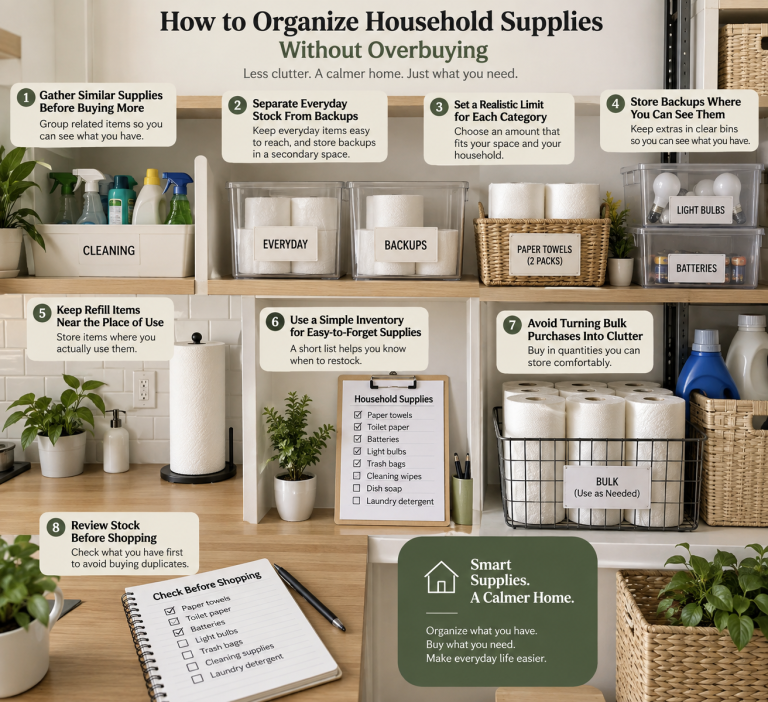
Once obvious clutter is gone, gather similar items together. Keeping categories together is one of the simplest ways to make a home easier to maintain because it reduces searching, duplicate purchases, and random piles. All batteries can live in one small box, all cleaning cloths in one basket, and all important incoming papers in one tray. The exact container matters less than the consistency of the category. As you group items, pay attention to where you naturally use them. A category should be stored close to the activity it supports whenever possible. Everyday coffee supplies belong near the coffee maker, not across the kitchen because a cabinet happened to be empty. Organization becomes sustainable when storage follows behavior. If you repeatedly leave something in the same place, that is valuable information about where its permanent home should probably be.
Give Every Frequently Used Item an Easy Home
An organized home depends on items being easy to put away, not merely easy to take out. If returning an object requires opening three boxes, moving another container, and stacking things precisely, the system will fail on busy days. Give frequently used items the simplest storage positions: open baskets, shallow drawers, hooks, trays, or shelves at comfortable height. Reserve deeper cabinets and higher shelves for things used less often. This is especially important in shared spaces where several people need to understand the system without memorizing complicated rules. A good test is whether you can put an item away with one hand in a few seconds. When the answer is yes, the home is much more likely to stay organized between larger resets. Convenience is not laziness in home organization; it is one of the main design principles that makes a system realistic.
Use Containers Only After You Know the Category
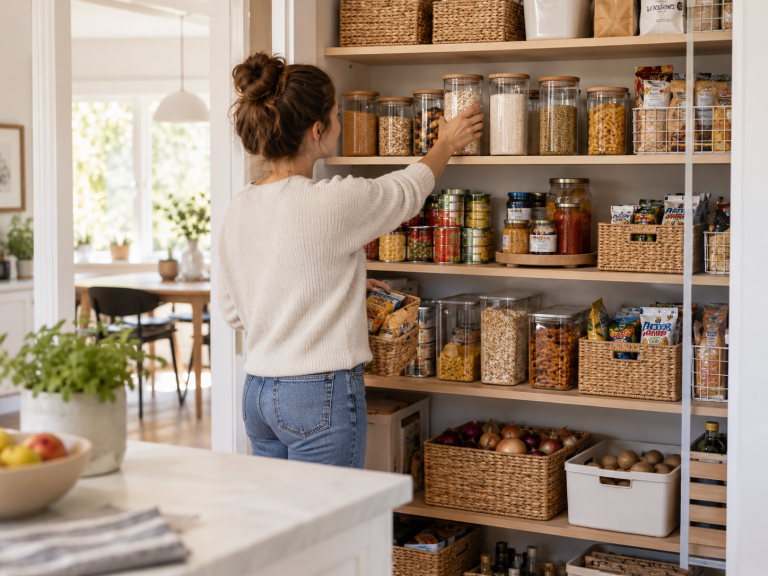
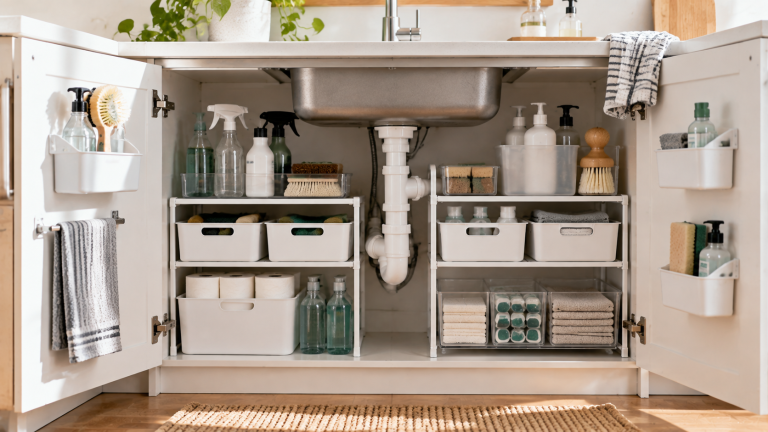
Storage bins can be helpful, but buying them too early often creates more confusion. Organize the category first, measure the available space, and then choose a container that matches both the amount you are keeping and the location where it will live. Clear bins are useful when visibility matters, while opaque baskets can make open shelving feel calmer. Drawer dividers work well for small items that tend to spread, but they should not force you to keep unnecessary duplicates. Leave a little empty space in each container rather than packing it completely full. That breathing room makes it easier to return items without rearranging everything. Labels can also help, especially in shared cabinets or storage areas, but keep them broad and practical. A label such as “baking supplies” is usually more flexible than a system that assigns a separate tiny compartment to every individual tool.
Create a Simple Landing Zone for Daily Clutter
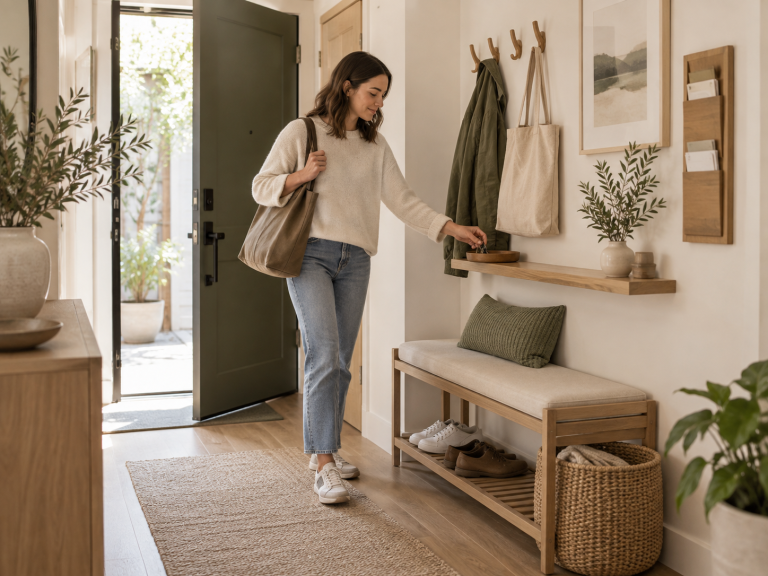
Many homes become disorganized because everyday objects have no temporary destination. Mail, receipts, school papers, sunglasses, bags, and packages arrive faster than people can make decisions about them. A small landing zone prevents those items from spreading across the house. Choose a convenient location near the main entrance or another natural transition point and give it only a few functions. You might use a tray for keys and wallet, a hook for a bag, and one vertical file for papers that need action. The landing zone should not become long-term storage, so keep its capacity intentionally limited. When it starts to fill, that is a reminder to process what is there. This single system can reduce visible clutter throughout several rooms because it captures items at the moment they enter the home instead of allowing them to travel from surface to surface.
Finish One Zone Before Starting Another
Organizing feels productive when you pull things out, make piles, and move quickly from room to room, but unfinished projects are one of the main reasons a home can look worse during an organizing effort. Before moving on, complete the entire cycle in your chosen zone: remove unwanted items, group what remains, assign homes, return everything, take donations out of the room, and dispose of trash. Finishing provides a reliable reference point for the next area and gives you a visible result that builds motivation. It also prevents “decision piles” from lingering for days. If you only have twenty minutes, choose a zone that can realistically be completed in that time, such as one drawer or one shelf. Small finished spaces create more momentum than large half-organized rooms, and they teach you which systems are working before you scale them across the rest of the house.
Build a Five-Minute Reset Into Your Routine
The difference between a temporarily organized home and a consistently organized one is usually a short reset routine. Pick one predictable time, such as after dinner or before bed, and spend five minutes returning visible items to their homes. Focus on the spaces that affect the next day: clear the kitchen counter, place shoes where they belong, gather stray cups, and put paperwork into the landing zone. This is not a cleaning session and should not turn into a major project. The purpose is to close the day with fewer loose ends so clutter does not compound. If a certain object repeatedly remains out because putting it away feels inconvenient, adjust the system instead of blaming the habit. Maintenance reveals where your storage decisions need improvement, and small changes made during these resets can make the whole home easier to manage over time.
Conclusion: Organize for Real Life, Not Perfection
Learning how to organize your home is less about creating flawless rooms and more about reducing the number of decisions you have to make every day. Start with one high-impact zone, remove what does not belong, group similar items, and give the things you use most an easy place to return. Let your existing routines guide storage locations, and resist the urge to buy containers until you understand what they need to hold. Most importantly, finish one area before expanding the project and protect your progress with a short daily reset. A home can be functional and peaceful without looking staged or minimal. The best organizing system is the one you can maintain when you are busy, tired, or distracted. If your systems make ordinary days easier, they are doing exactly what they should.